Thangka
by Ans Swart
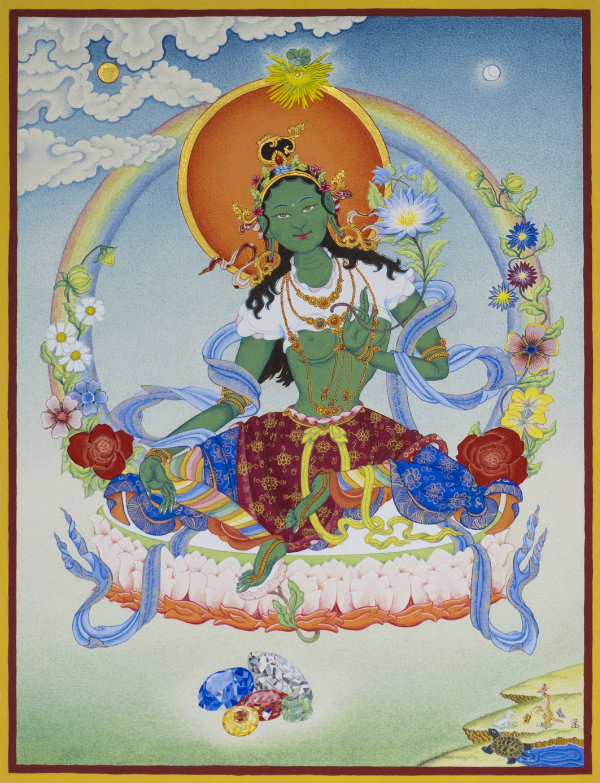
Thangka - Green Tara
Thangka GreenTara, 475x360 mm
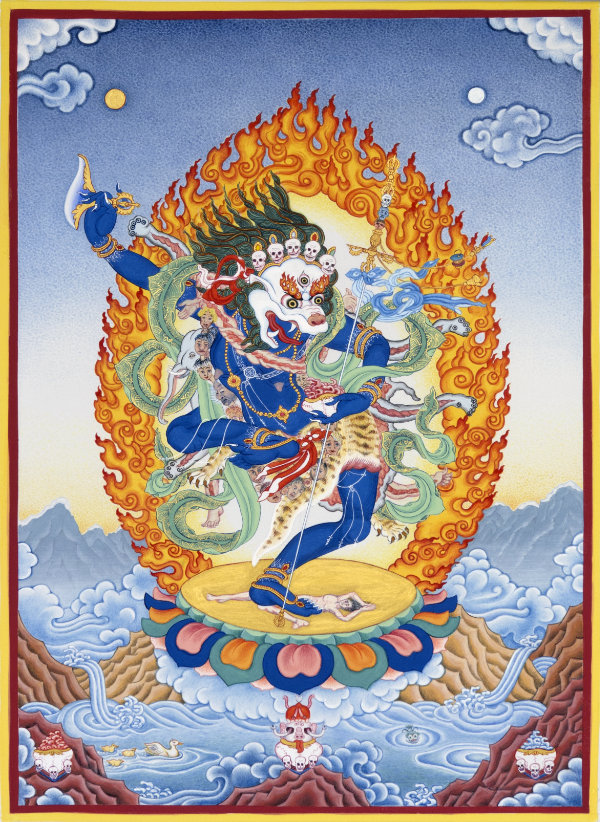
Thangka - Simhamukha
Thangka Simhamukha, 520x320 mm
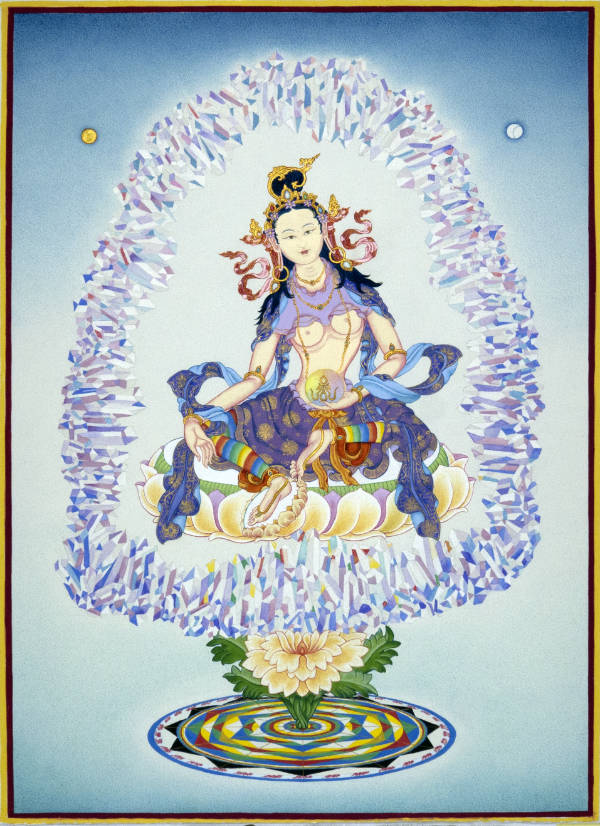
Thangka - Goma Devi
Thangka GomaDevi, 700x500 mm
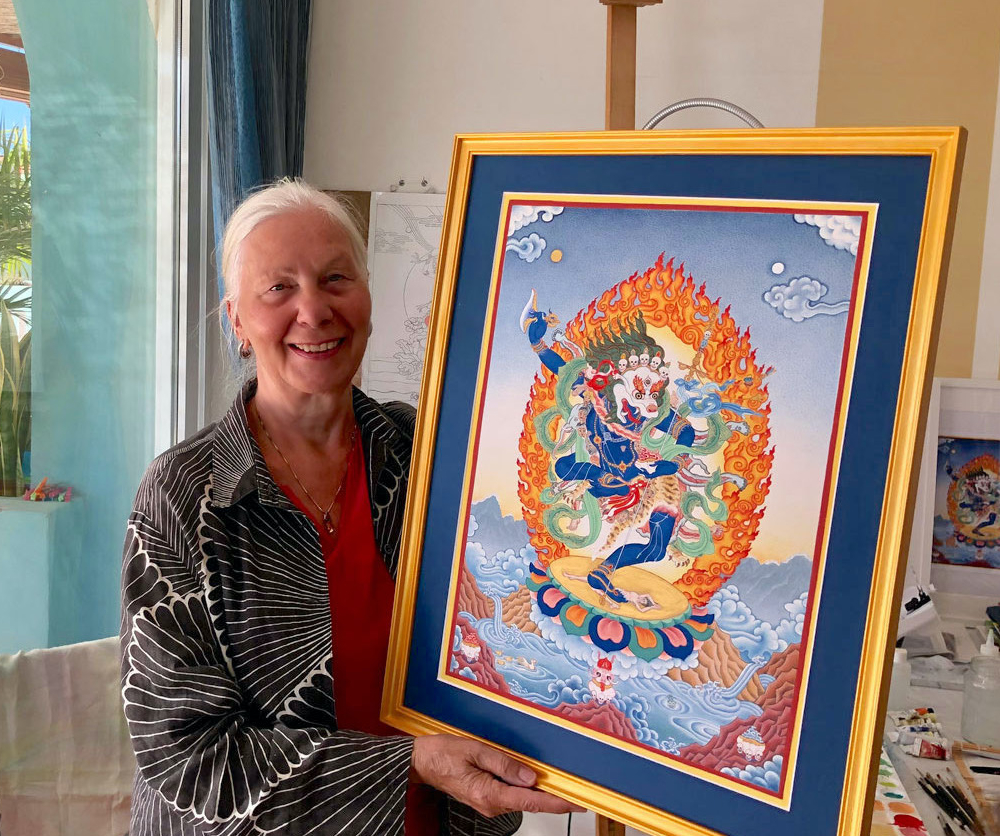
Ans Swart during her time on Tenerife with her Thangka »Simhamukha«, 2022
Peacefull Deities
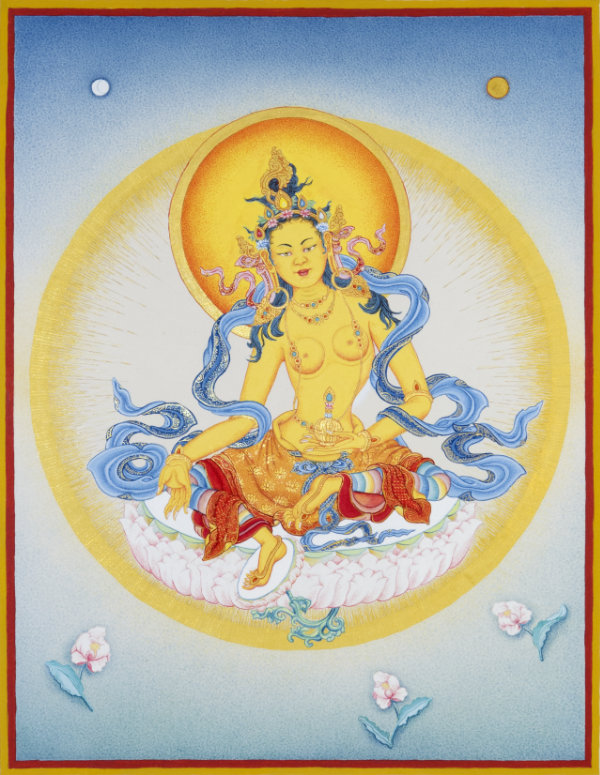
Oedzer Chenma
470 x 360 mm
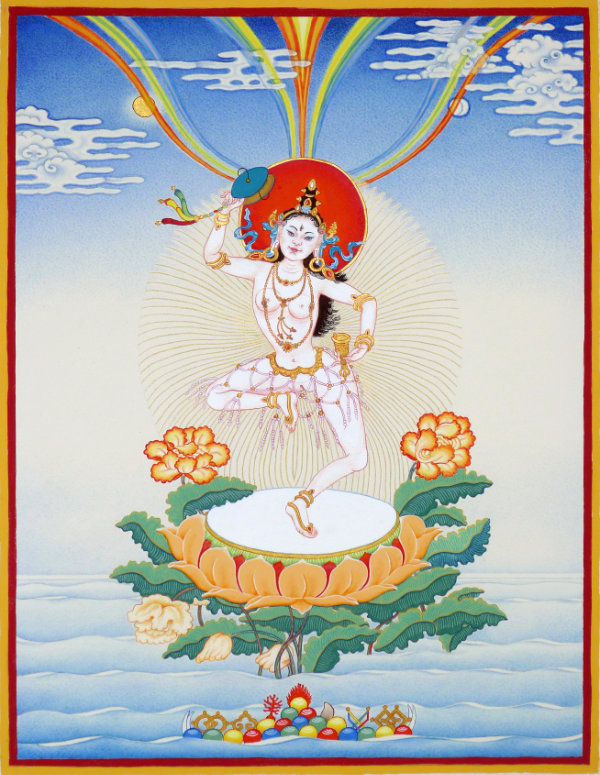
MagicLabdron
470 x 360 mm
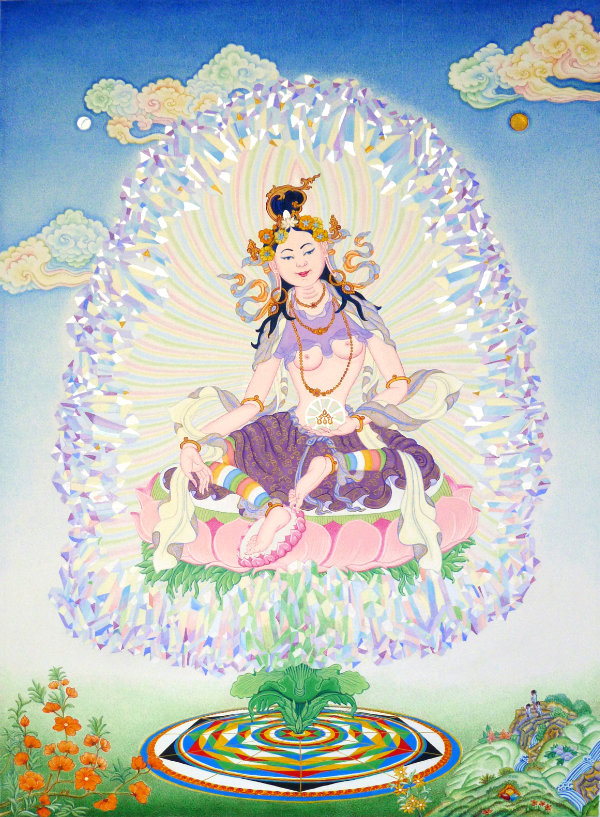
GomaDevi
700 x 500 mm
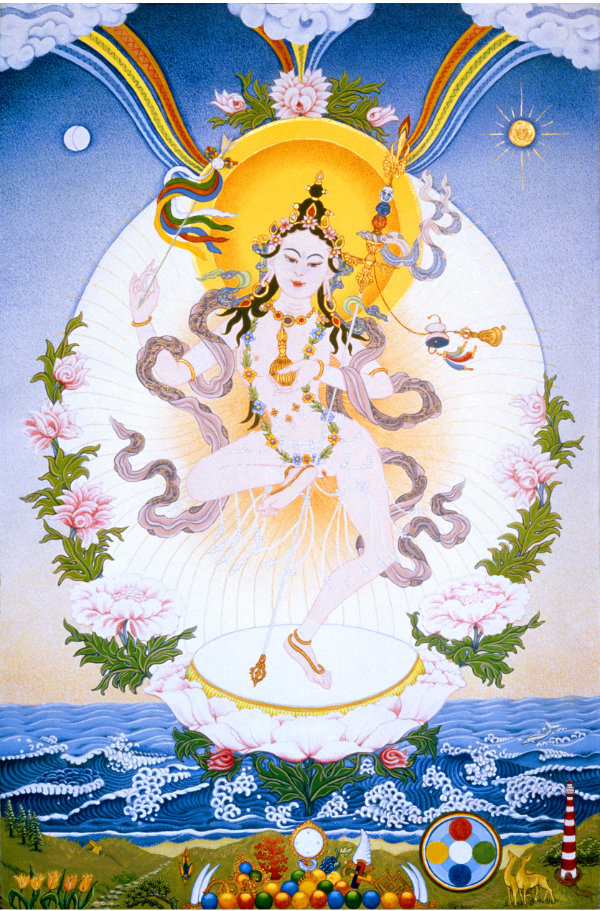
Mandarava
525 x 345 mm
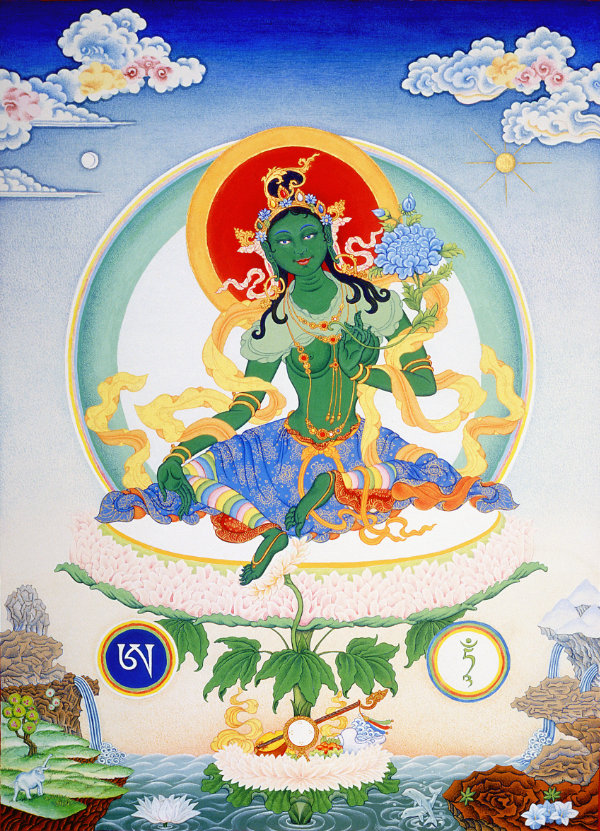
GreenTara
625 x 445mm
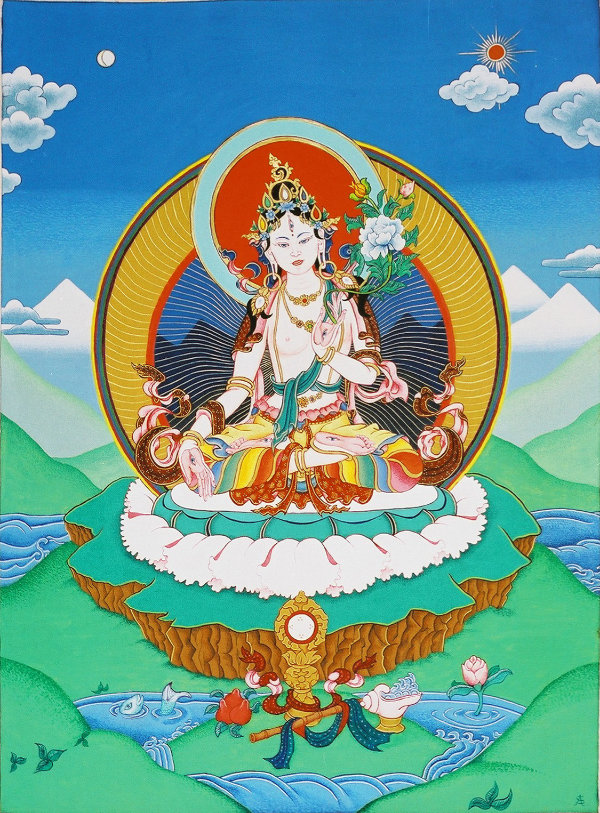
WhiteTara
700 x 500mm
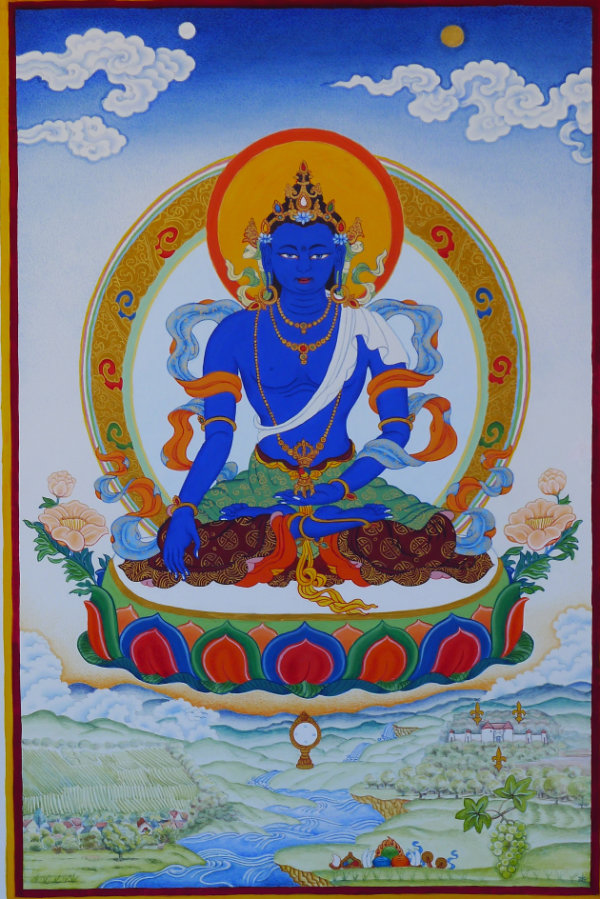
Ashobya
540 x 350 mm
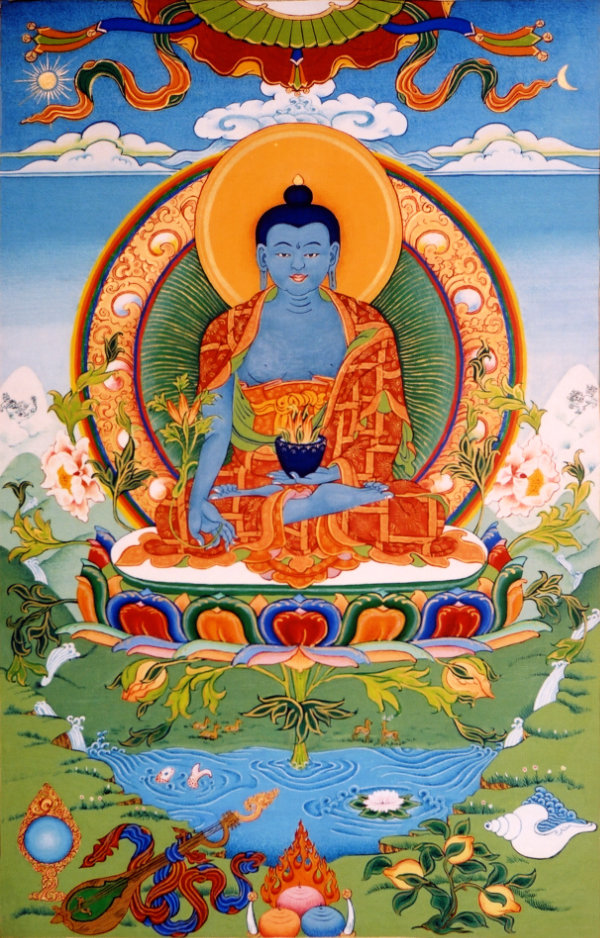
MedicineBuddha
545 x 350 mm
Wrathful Deities
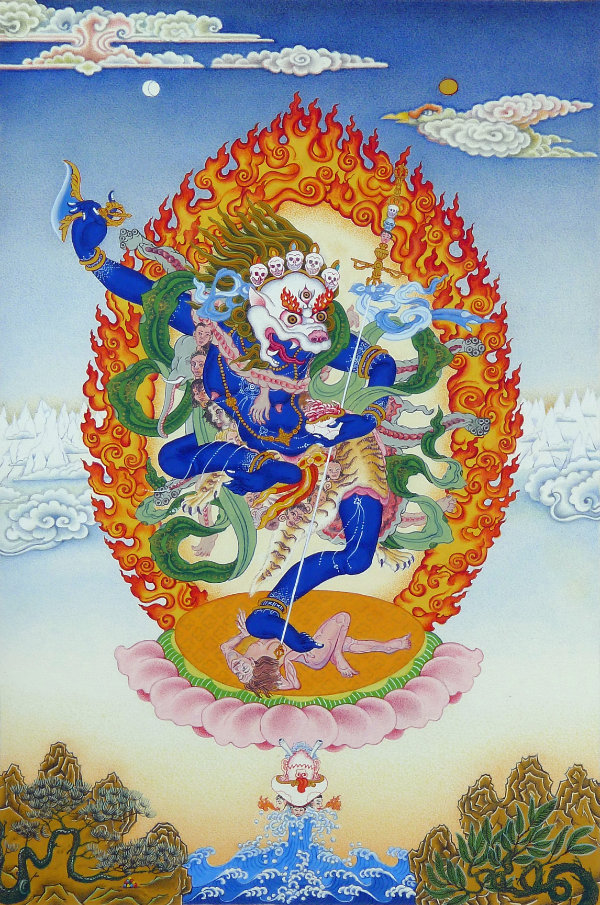
Simhamukha
530 x 350 mm
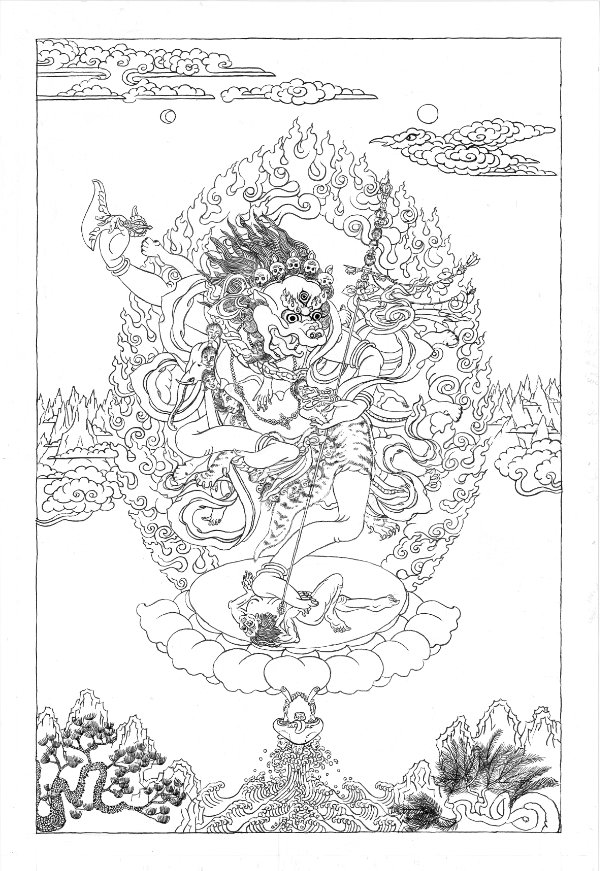
Simhamukha
530 x 350 mm
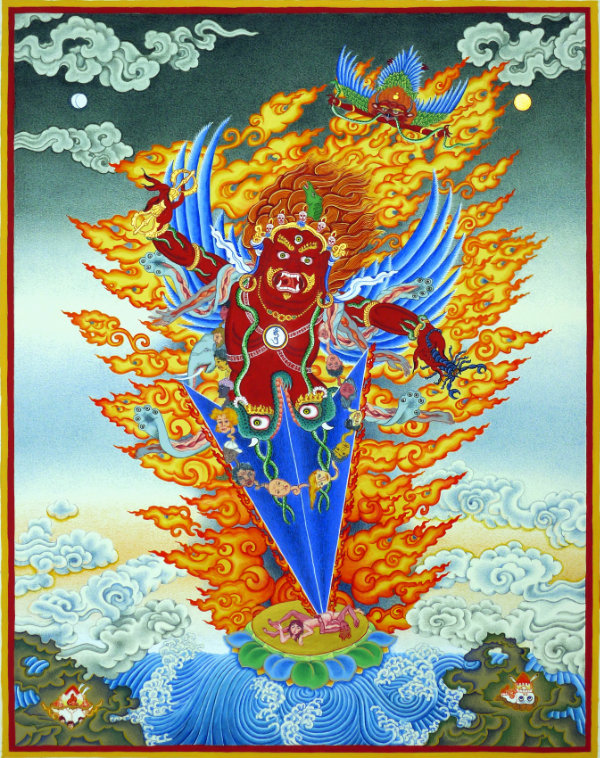
GuruDragpur
590 x 455mm
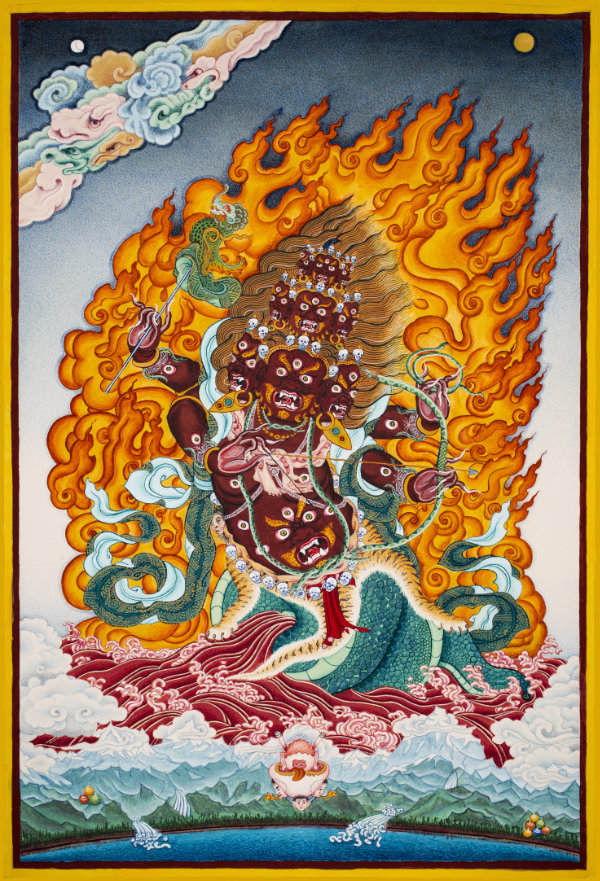
Rahula
540 x 360 mm
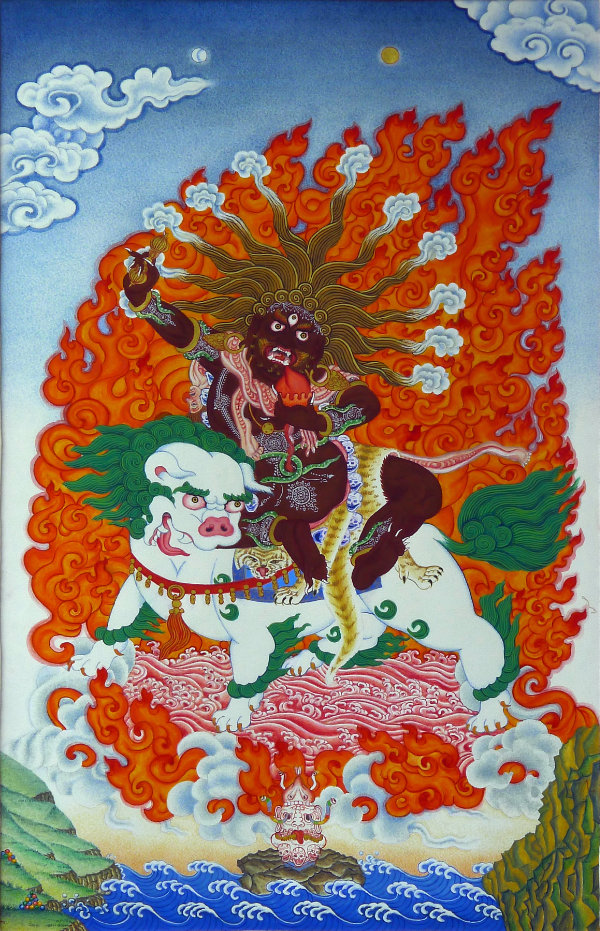
DordjeLegpa
540 x 350 mm
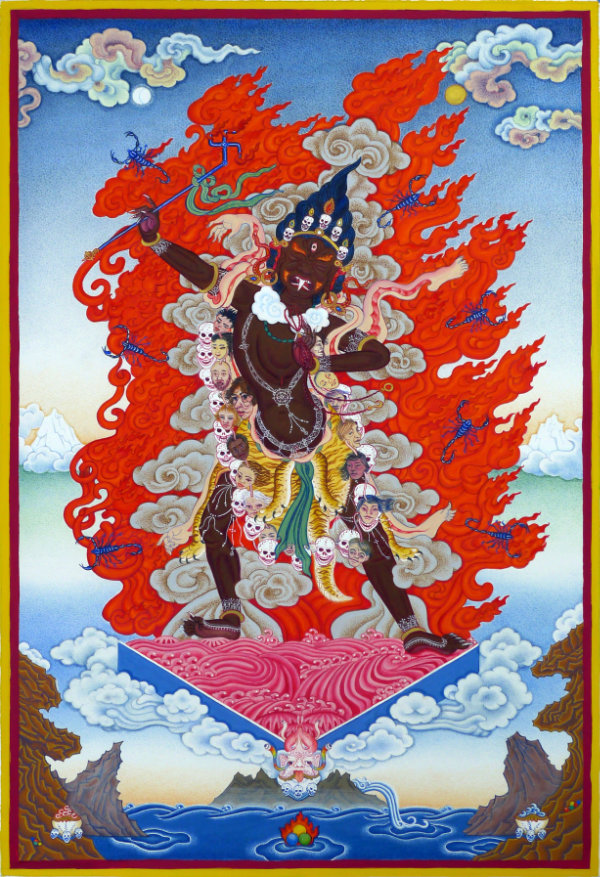
Ekajati
540 x 360 mm
Thangka
Over Thangka-painting.
Een thangka is een scroll-painting van een Buddhafiguur. De materialen die daarvoor gebruikt worden zijn: fijnmazige katoen, gouage of plakkaatverf. Het thangka schilderen is een heel nauwkeurig ontstaans proces, volgens een traditionele methode. Hoewel je tegenwoordig ook op de computer buddha’s kunt ontwerpen. Er zijn vredige en toornige Buddhas. Een paar voorbeelden zijn de vredige Tara, Avalokiteshvara en Mandarava, toornige buddha’s zijn o.a. Simhamukha (vrouwelijk), Guru Dragpur en Rahula. Er zijn heel veel verschijningsvormen, die afhankelijk zijn van de Tibetaanse leermeesters die inzicht geven in hun betekenis en visualisatie. En of ze een functie hebben in Hinayana, Mahayana of Vajrayana.
Het werken met deze beelden is in zich een meditatie. Je oefent om heel geconcentreerd en betrokken te werken aan hun voltooiing. De introductie kreeg ik van neef Jan een boeddhistische monnik, en leermeesters zoals Andy Weber, Marian van der Horst, Lama Gyurmed en Tharpen Lintsang. De laatste is mijn huidige Karma Gardri Styl-leermeester. Hij is de zoon van de beroemde Gega-lama. Tharpen heeft zijn instructieboek herschreven in het engels.
Wil je meer weten over thangka schilderen, lessen of workshops kijk dan op de website van Tharpen Lintsang: Link geeft les in Amsterdam, Brussel en Huy (Belgie)
About Thangka painting.
A thangka is a scroll painting of a Buddha figure. The materials used for this are: finely cotton, gouache or poster paint. Painting a thangka is a very precise process, following a traditional method. Although nowadays you can also design Buddhas on the computer. There are peaceful and wrathful Buddhas. A few examples are the peaceful Tara, Avalokiteshvara, and Mandarava, while wrathful Buddhas include Simhamukha (female), Guru Dragpur, and Rahula. There are many manifestations, which depend on the Tibetan teachers who provide insight into their meaning and visualization. And whether they have a function in Hinayana, Mahayana, or Vajrayana.
Working with these images is in itself a form of meditation. You practice working on their completion with great concentration and commitment. I was introduced to this practice by my cousin Jan, a Buddhist monk, and later teachers such as Andy Weber, Marian van der Horst, Lama Gyurmed, and Tharpen Lintsang. The latter is my current Karma Gardri Styl teacher. He is the son of the famous Gega Lama. Tharpen has rewritten his instruction book in English.
If you would like to know more about thangka painting, lessons, or workshops, please visit Tharpen Lintsang's website: Link teaches in Amsterdam, Brussels, and Huy (Belgium).
Transformation is not Dzogchen!!!
Simhamukha
Externally, Guru Simhamukha is the nirmanakaya master and wisdom dakini Lekyi Wangmo; internally, she is the sambhogakaya master in peaceful form as Sangwa Yeshe or in wrathful form as Simhamukha; secretly, she is the Great Mother of All the Victorious Ones, or Samantabhadri. Thus, in actuality, she is the essence that embodies the potentiality of all the masters, sugatas, vidyadharas, and victorious ones.
She is the yidam through whom any yogin or yogini on the path accomplishes without effort all supreme and common siddhis, and she is very powerful in removing in an instant all the interruptions on the path, such as curses and magic formulas sent by the Eight Classes of gods and spirits and by both human or nonhuman beings.
Her body is dark blue and her lion face is white with a fiercely wrathful expression. As a symbol of eradicating the emotions, the root of samsara, her right hand raises a curved knife, or trigug, with a vajra handle into the sky.
As a symbol of concentrating all the power, capacity, and blessings of the universe in the essence of primordial potentiality, her left hand holds a blood-filled kapala at the heart. As a symbol of the inseparability of method and prajña, she has a khatvanga in the crook of her left arm. As a symbol of manifesting in the total equality in which samsara and nirvana are nondual, her left leg is extended and her right leg is bent in a dance movement while she is standing in a dignified manner on the seat of a lotus, a sun disk, and a corpse. As a symbol of having naturally perfected all the qualities of total wisdom, she has all the ornaments of wrathful female manifestations.
Gouache on cotton canvas
Guru Tragphur
In order to tame all the malicious and arrogant classes of the world, the Mahaguru Padmasambhava manifested in a form that embodied all the wrathful sugatas capable of power and strength, and this form is called Guru Tragphur.
In a dimension of roaring fire and howling wind of wisdom, his body is dark red with a fiercely wrathful expression. To symbolize his command over the Great Secret Vajra, his right hand raises a vajra into the sky. As a symbol of having conquered all the arrogant classes of the universe by means of his power, his left hand squeezes a black, nine-headed scorpion. As a symbol of having completely perfected the power of the wrathful king Supreme Horse Manifestation (Hayagriva), Lord of Lotus Speech, in the midst of his upward-streaming, yellowish, braided hair a green horse head is distinctly neighing. As a symbol of having completely perfected the power of the five families of Garudas, the antidote for taming the powerful Nagas and Tsens of the universe, a Garuda soars above his head and he has wings made of meteorite.
As a symbol of embodying the Vajra of mind of all the ocean of masters, sugatas, vidyadharas, and victorious ones, at the center of his heart, inside a thigle of five-colored light, is a brilliant dark blue syllable HŪM. As a symbol of having completely perfected the power of the Kilaya activity, the lower part of his body is shaped as a pointed triangular dagger. In order to totally tame the great classes of beings of this degenerate age who send provocations of energy, he is standing in a dignified manner with the blazing point of the dagger piercing the heart of a Gyalpo and a Senmo that lie across each other upon a lotus and sun disk.
Gouache on prepared cotton, with details in 24 karat gold
74 x 85 cm with frame
Framed with premium anti-reflective Artglass