Smartphone
Some Words about Ans _ only seen at smartphones.
Catalogs
»from moment to moment to moment«
7 jaar werken (1987 -1994)
Text Fancis Verdonk
Space Initiator and President of The ConSequence Foundation
Design Roger Bröchler, Düsseldorf, Düsseldorf
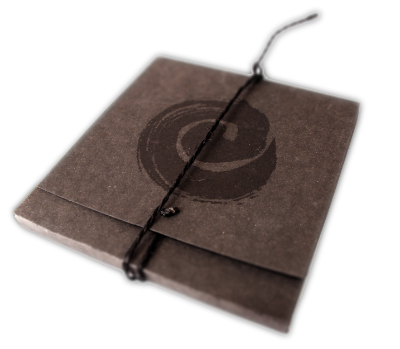
Print 16 doublesided printed Leporello
Size 21x21 cm - Overall 320 cm lentgh
Paper inside CranesCrest pure Cotton by Simson UK
Paper outside LesNaturals anthracite, recycling, with black screen printing, laced by a black cotton cord
Book binding zig zag stitching, hand sewn
Edition 350 pcs.
Presentation Diamond Bourses, Amsterdam, 1995

»weer is mijn moeder«
12 Paintings
Prologue Dr. Karla Bilang, Berlin 2004
Design & Digital Printing Roger Bröchler, Düsseldorf, Düsseldorf
Black cardboard cover with pigment-prints on paper.
Photo Claude Crommelin
Text A.C. Swart-Konijn (1917-2001)
Translation English Adriana Bijman, Paul Glazier diaries
Translations Dutch Marja Buist, Joachim Robrechts, Ans Swart
Font TimesTenRoman with QuarkQPress 3.2
Book binding WIRO-O by Roger Bröchler, Düsseldorf, Düsseldorf
Edition 100 pcs.
It contains 90 pages, 377 colour prints including the 12 paintings and each day writings.
Original Size 12x 90x90cm, oilpaint on linen, 2001-2002
Replicas are printet on a EPSON 9600, Pigmentink
12x 30x30cm on Cotton by Roger Bröchler, Düsseldorf, Düsseldorf
2004
Futher Catalogues and Publications:
2002 NRC Daily Newspaper, under selected galleries
Ans Swart for this exhibition »Weather/Again is my mother« the artist Ans Swart has been inspired by the diaries she inherited from her mother. In the diaries the weather was closely observed and written about in detail almost every day. Based on the sometimes cryptic and sometimes poetic writings of her mother, Swart has made 12 oil paintings of 90 x 90cm. Each painting is a calendar divided into compartments showing the days of the month. In this way a timeless document of a lifetime emerges, in which the season’s changes can be read from the changing colours.
2001 Self-portraits in Art-House (Kunsthaus) Erfurt (D)
1995 Brochure »Autumn Salon«, Verena Kyselka, daily articles
1986 Catalogue »Sound-paintings« foreword of Ans van Berkum
1986 Catalogue Festival »Look!... Music!« , Arnhem by Maarten Beks
Words
Prof. Elisabeth Langley, Montreal Canada, 10. June 1996
It gives me great pleasure to write about the creative process and art works of Ans Swart.
Examining her historical development, I discovered an artist unlimited by bounderies and contineously evolving.
The ways of her multidisciplinarity, that have been expressed in visual images, kinetic movement, audio sounding and poetic visualizing, have accumulatively brought Swart to a dynamic and vivid point of artistic development.
The vitality of the recent visual art works, although static in the frame, has been created with an intimate knowledge of the power of energy - the reality of human energy within the abstract and/or spiritual form.
Although possessing an artistic maturity Swart is continuing her search for personal freedom of expression. Under these circumstances, we the „audience" can be assured of many, still known, enriching experiences.
Dr. Dorothea Franck
T R A N S F O R M A T I O N
At the opening of Ans Swart’s exhibition in the Waag in Haarlem, North Holland, 8 October 2000, the following introduction was given by Dr. Doro Franck, cultural-literary scientist:
I would like to say a few words to accompany this exhibition, in particular about the symbolic meaning and background to this impressive six-paneled work.
Normally it is tricky to try to clarify works of art with verbal concepts; ultimately a pictorial work cannot be replaced by words. Indeed, words leading to concepts can become an obstacle between a work of art and the viewer. Art should not rely on concepts but on understanding.
Look with an unprejudiced eye despite all I tell you. The power of this colour-magic does not depend on an explanation.
In this case the paintings have a certain symbolic meaning and I will add just a few notes that hopefully will not diminish the view but increase the understanding.
At first people who know the earlier works of Ans Swart will be surprised. After her wildly dynamic and spontaneous paintings of an earlier period, which originated partly out of her expressive performances, the tranquillity of these paintings is surprising. This process was already taking place in her series of vases. But here not only does the movement fade away but also the last remnant of narrative figuration disappears. Though I would hesitate to call these paintings abstract and, as I will make clear, there is still movement, it is of a different character than before.
The inspiration for this study in colour, it can also be said, comes from a Tibetan purification ritual. A few years ago Ans Swart went on an adventurous trip through Tibet and since then she has studied a particular tradition of Tibetan Buddhism. But this particular ritual is only the start, a place of departure. By the way, I don't want to go into details of the symbolic meaning, that would be misleading and taking attention away from the work of art itself. In any case Ans Swart has added her own vision and interpretation.
The starting point of this ritual is visualization. Six disturbing passions or emotions - and the matching worlds (lokas) - are symbolized through particular colours situated in the different chakras. The ritual purifies each colour in turn. Instead of being eliminated the negative emotion (such as pride, jealousy, anger or attachment) is transformed into related wisdom. As a painter Ans saw a challenge. She searched for a way to make this inner transformation process visible. She combined the given colours with their complementary colour. (It is well known that for every colour there is an exact opposite or complementary colour; you can observe it in the after-image on your retina.) She has let the two opposites blend into each other, from the top down. This has brought, so to speak, a fight of antithesis at the point where the contrasting colours meet. This is precisely the most interesting aspect, because there, where the battle should be the most vehement, appears the most quiet zone of grey. In a negative sense grey could be seen as indifferent or doubting, but in this case it can more readily (it lies for the hand, a dutch expression, that it flys out of the before) seen as a form of calm and wisdom, of equanimity, balance and reconciliation.
To become purified every passion must go through this grey zone. So there is really also a movement of meaning in the process of transformation. There is a vertical progression from top to bottom (or the other way around) and a horizontal progression from passion to passion: there is always another nuance of equilibrium arising. But there is still a third axis, a third movement, the one of depth, the line to the viewer. Here not only the grey or the purified colour is significant. Here what matters is the whole: all colours complete each other, having equal value. There is no judgement here about good or bad colours, just as with emotions what is relevant here is the total view, the process of integration. This integration succeeds only when the viewer stands at the right distance. Intentional or not this is psychologically symbolic. We only come to self-knowledge through a necessary distancing, at which point we are able to look at ourselves intelligently and without judgement yet with great precision and patience.
In this same Tibetan tradition it is said that, depending on circumstance and capacity, there are three ways to deal with passions and disturbing emotions etc.
1. one can avoid or neglect the passion.
2. one can transform it into its opposite, like hatred into love.
3. But one can also apply no judgement at all: integrating instead of eliminating or transforming. That means one is so relaxed and balanced that one can also give negative emotions a place. One experiences the energy of the emotions without allowing them to take over and determine our actions.
In these paintings the second as well the third process is present, depending on what the spectator wants to see.
In the final analysis it is the process, which means the path, which is of most importance, not the goal. Even though for this integrated experience - a way of looking which connects and balances all elements - the scene has been set by this work of art, in the end it is the creation of the viewer. Please grant this process the necessary time to unfold.
This adventure in complementary colours is also applied in the other works seen here. Sometimes in a very subtle way as when one sees only the grey on the front side. The colours which, when mixed result in this specific grey, appear only around the frame. It is only when the colours are really their exact complementary that one reaches a balanced grey and, for instance, not a brown or purple or other mixture.
I wish you much joy in looking.
Dr. Dorothea Franck
ANS SWART (Interview by Petra Nelstein)
TRAVELER THERE IS NO ROAD
THE ROAD IS CREATED BY TRAVELING
THE ROAD IS ACTUALLY YOUR POOTSTEPS
THERE IS NOTHING ELSE ...
(ANTONIO MACHADO)
This poem is part of the video taken of Ans Swart's soloperformance in Pelze Multi-Media in Berlin. Her art is rich, including visual aspects, voice and dance. On the screen I see pots of paint and bruches. She touches the paper on the wall with her whole body and covers it with color. The emotional erruption following brings about images and sounds. This combination is quite impressive: the novements, wich are at time sharp, and then snooth and gentle.
The sounds that are thrown on the paper, and sometimes float in space. The colors and abstract forms wich appear on the paper.
In the beginning I have conflicting feelings about her performance.
The energy and honesty of her emotions touch me. The explosive strenght, but also the vulnerability intriques ne. They bring to mind associations and remembrances deep inside me.
"The contact with the paper is very deep and meaningfull. You could say that we are partners* says Ana Swart. This explains my feeling as an intruder.
"The Traveler" is one of the numerous performances by Ans Swart wich have taken place in Holland, Belgium and the United States.
She discribes her work as "the exploration of the emotional and phisical space between sound, color and movement" Thin implies an action wich goes beyond frontiers, using improvisation as important ingredient for her. Her body, voice and painting form a totality, resulting in a explosive uncovering of enotions transformed into an "Action painting" or sound painting as Ans Swart herself calls her work. There is no doubt about the directness of her work.
After completing a traditionel academic education in painting, Ans Swart went in search of other art forms, in order to find more meaning in her work. As an artist she not only wanted to apply her inspirationin relation to painting but also to theatre.
She found inspiration in minimal music and dances and performances of the seventies and in artist such as Robert Wilson, Barbara Heinisch, Pina Bausch and Prancis Verdonk.
She was able to find a large studio with enough space for movement and later on she includes as third element the voice and sound. Pinally she dicided to step out of the isolation of her studio and to see what the confrontation with a public could bring about.
While working and during personal contact, Ans makes the impression of being an energetic, spiritually oriented woman. What is the source of her inspiration? "There are nany spiritual moments in my 11fe. For example, while giving a workshop in Spain, it is very moving to see what people do with the materials I opper them. This exchange and sharing of my knowledge gives me a lot of creative energy. Begin 1991 I went to Mexico. I was fascinated by its culture and mythes, the people, the landscape and the spacific colors in nature. The totality of these impressions has formed a basis for my most recent work."
Ans Swart shows me her studio. fe look at some of the paintings based on her trip to Mexico. The clear expressive colors are completely different from the darker ones from her one-year-stay in Berlin. Why this difference" "Life is dinamic, changeable, and so are the colors I used. While in Berlin I was influenced by the seriousness of the city and by the division wich reigned at that time. That gave rise to black and dark colors. Mexico created a completely different feeling in me, wich I tried to translate into my work".
The wall on the right side of her studio is almost completely covered by a huge piece of work on paper. I fantasize that it came to being during a nonstop vulcano eruption of impulses.
Ans tells me that she worked at it in an playfull co-operation with another -mime-clown artist; Miriam de Jong. She has not only worked together with her but also with other artists, dancers and musicians, like Birgit Ruttkowski, Silvia Nakach, Stoffelien Verdonk, Peter Preysen, Kalle Mews and recently with Kozana Luca from the Roy Hart Theatre in France. However according to Ans there are also disadvantage to performing together.
"Then I don't feel as integrated within myself. A reason for me to resume working on my own for a while".
While I pack my things at the end of the interview, she says decicevely: The point is finding freedom, to create space in your life, continuesly.