Thangka
by Ans Swart
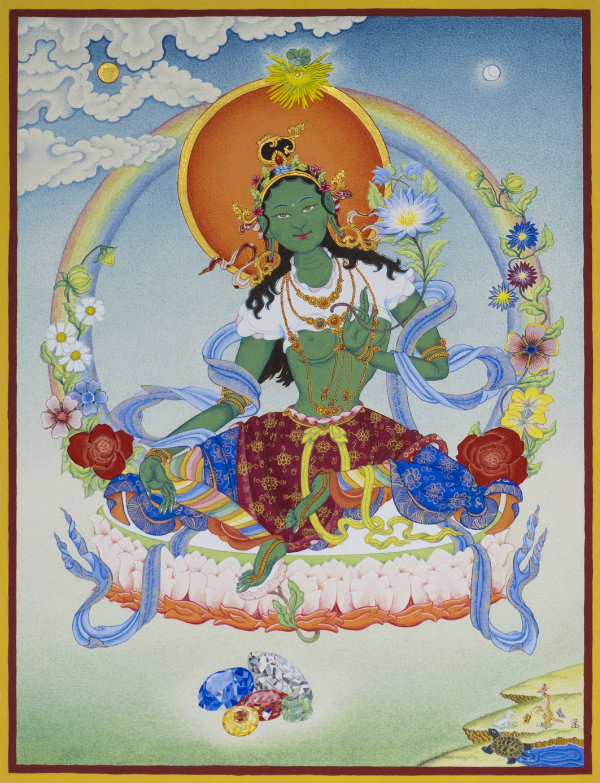
Thangka - Green Tara
Thangka GreenTara, 475x360 mm
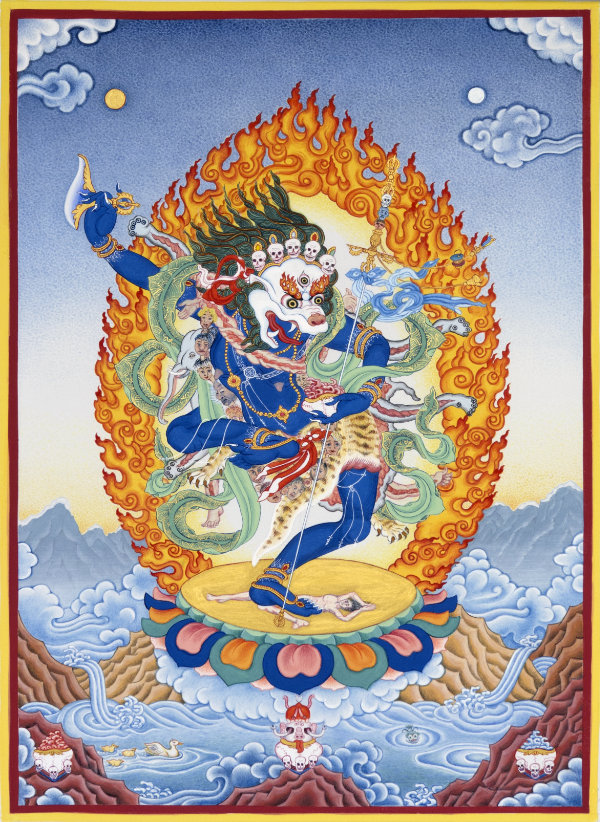
Thangka - Simhamukha
Thangka Simhamukha, 520x320 mm
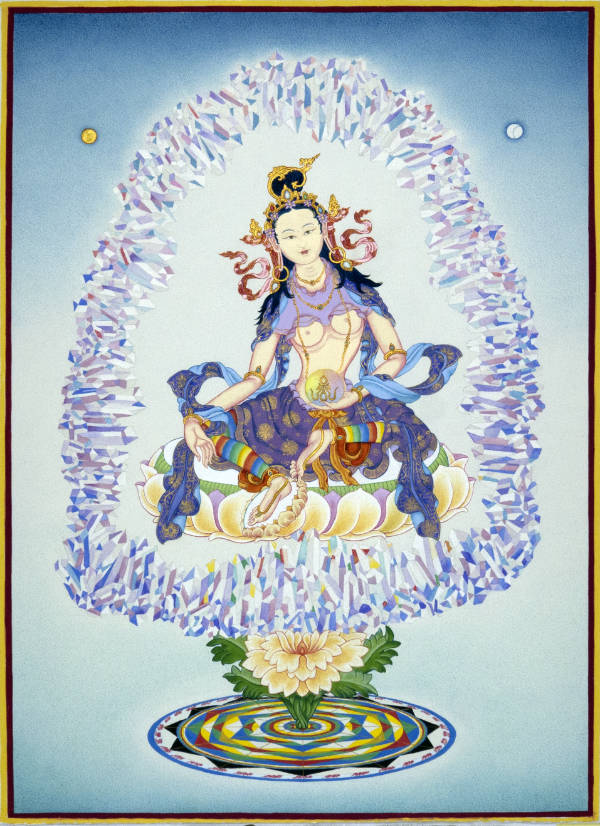
Thangka - Goma Devi
Thangka GomaDevi, 700x500 mm
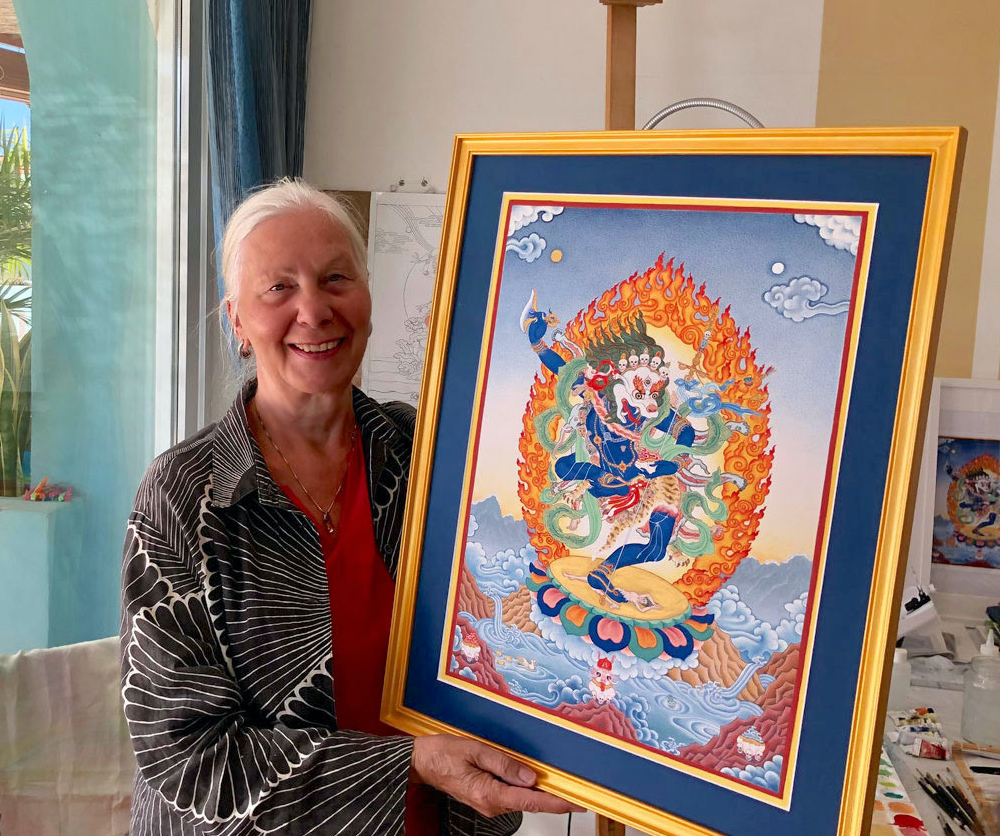
Ans Swart during her time on Tenerife with her Thangka »Sinkhamukha«, 2022
Peacefull Deities
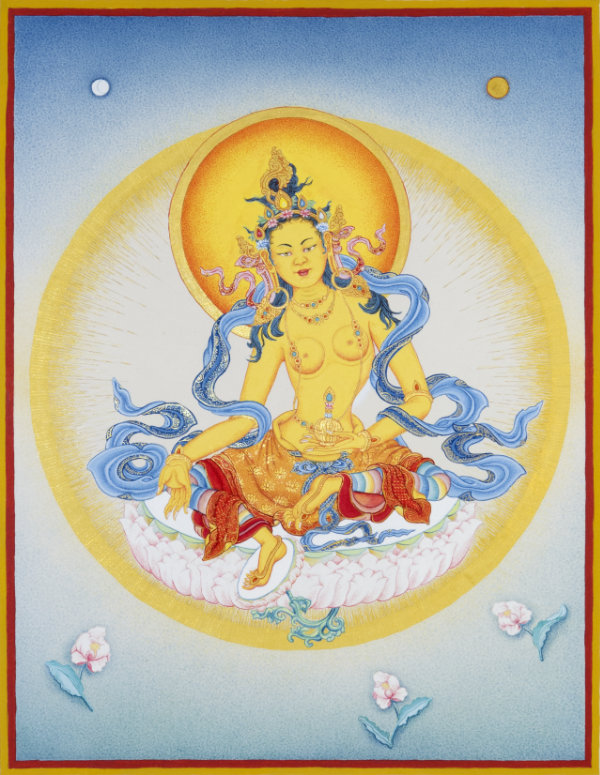
Oedzer Chenma
470 x 360 mm
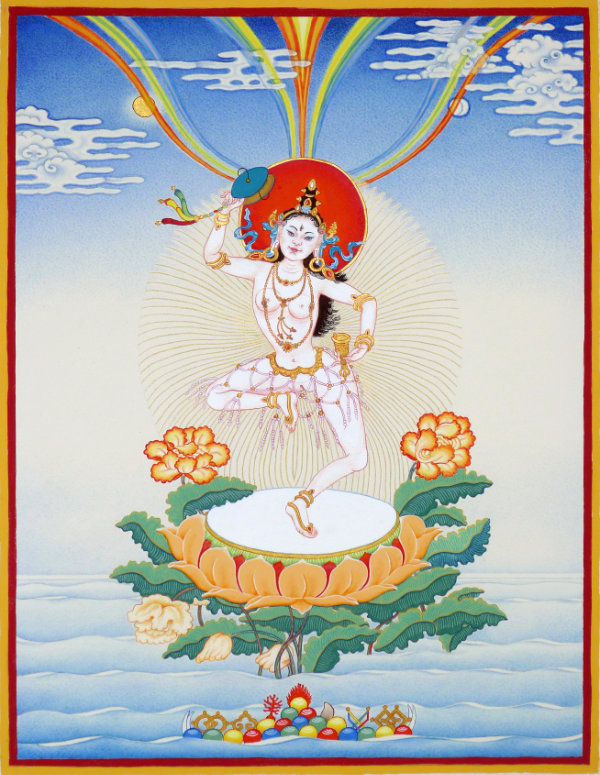
MagicLabdron
470 x 360 mm
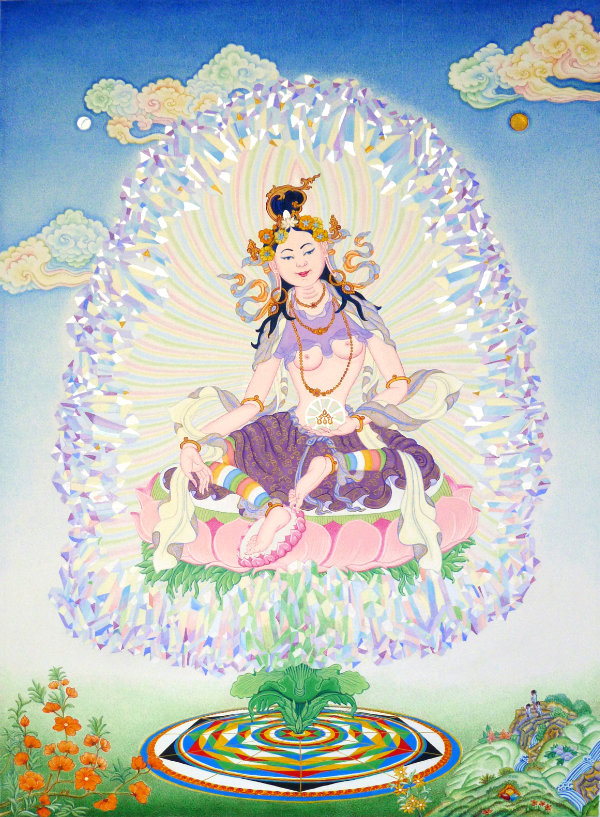
GomaDevi
700 x 500 mm
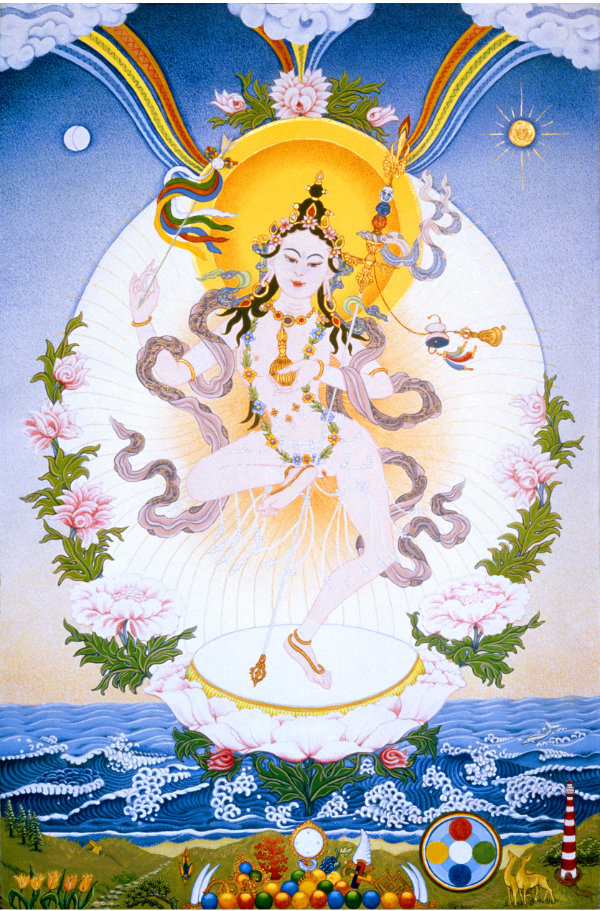
Mandarava
525 x 345 mm
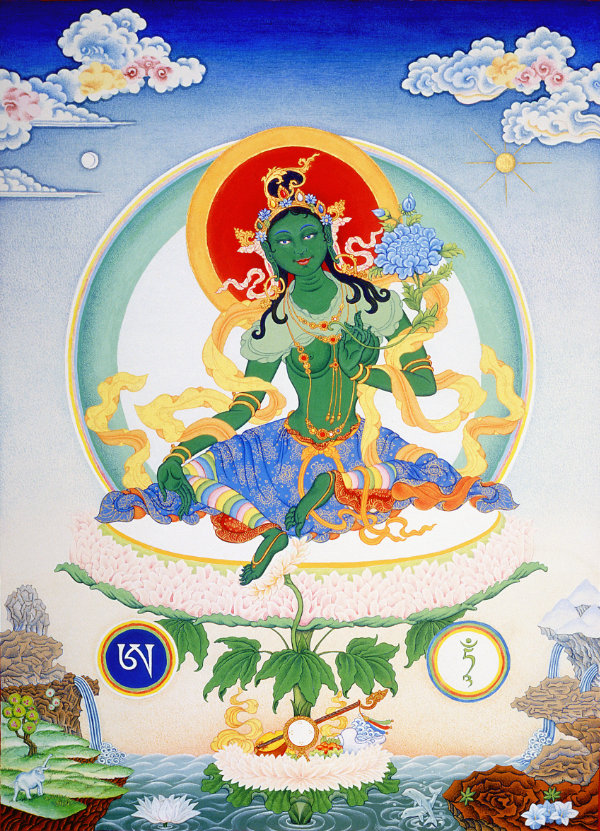
GreenTara
625 x 445mm
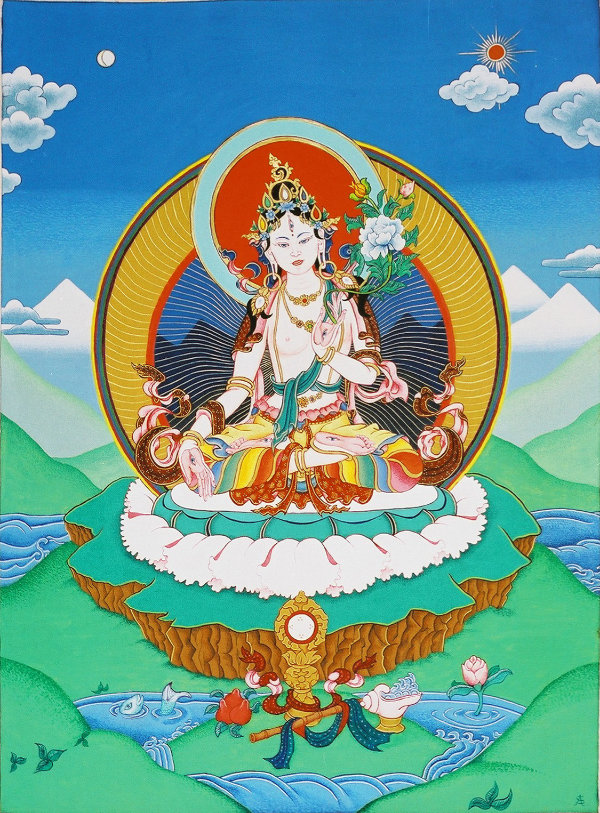
WhiteTara
700 x 500mm
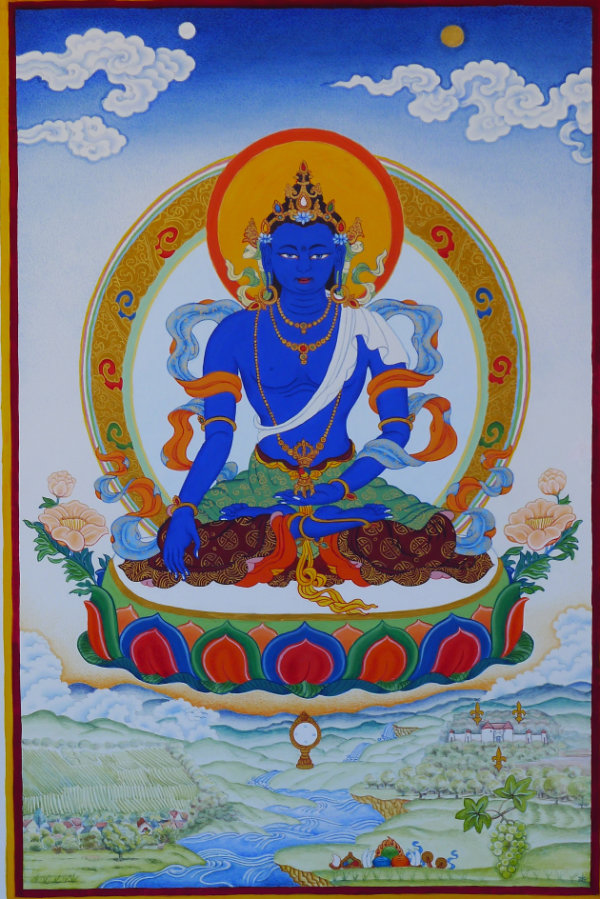
Ashobya
540 x 350 mm
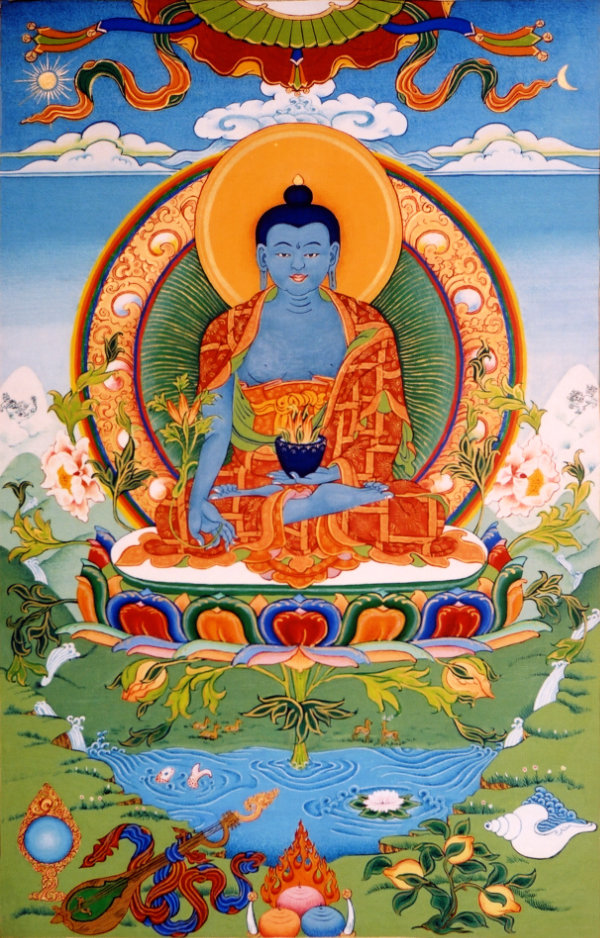
MedicineBuddha
545 x 350 mm
Wrathful Deities
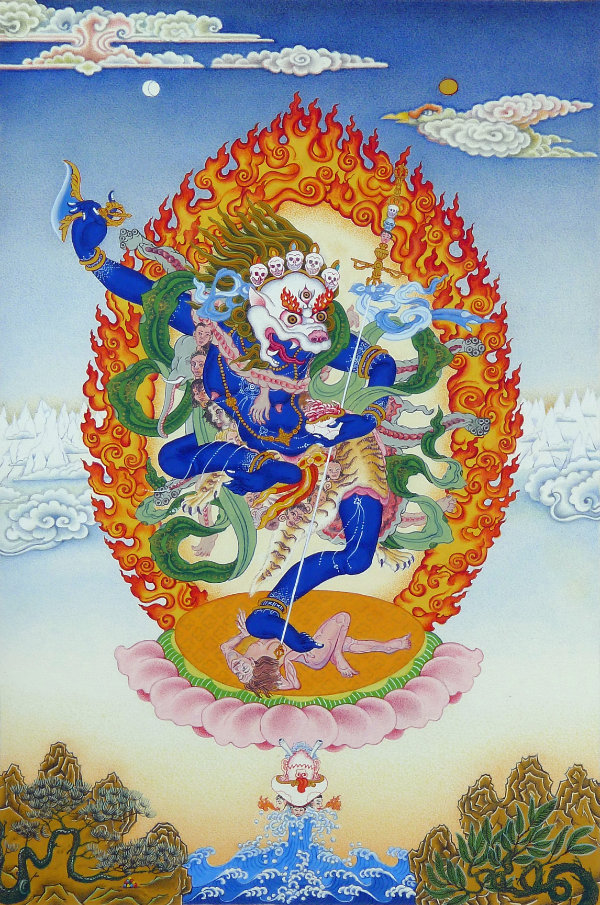
Simhamukha
530 x 350 mm
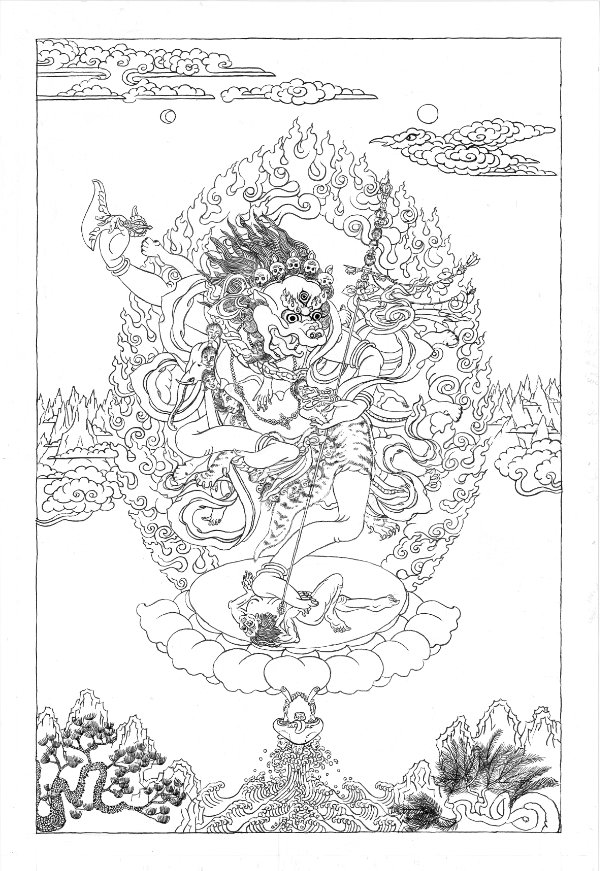
Simhamukha
530 x 350 mm
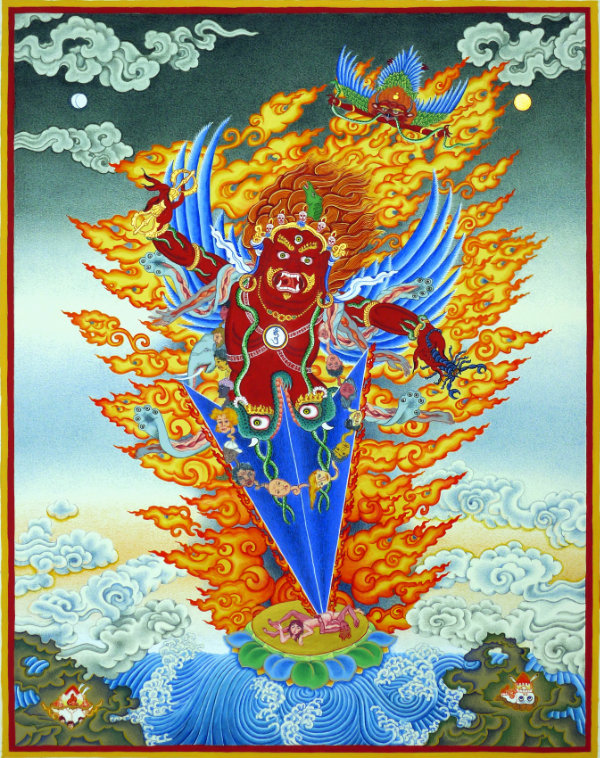
GuruDragpur
590 x 455mm
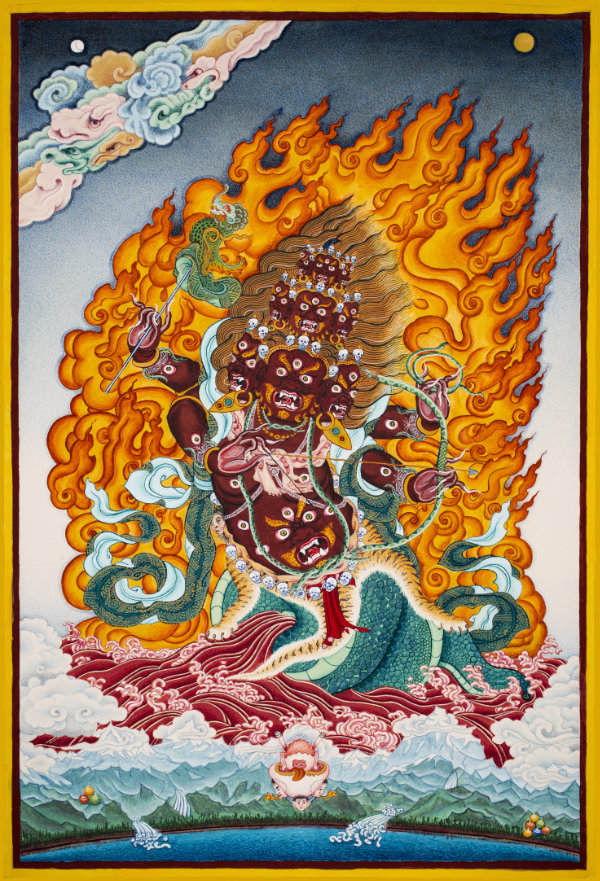
Rahula
540 x 360 mm
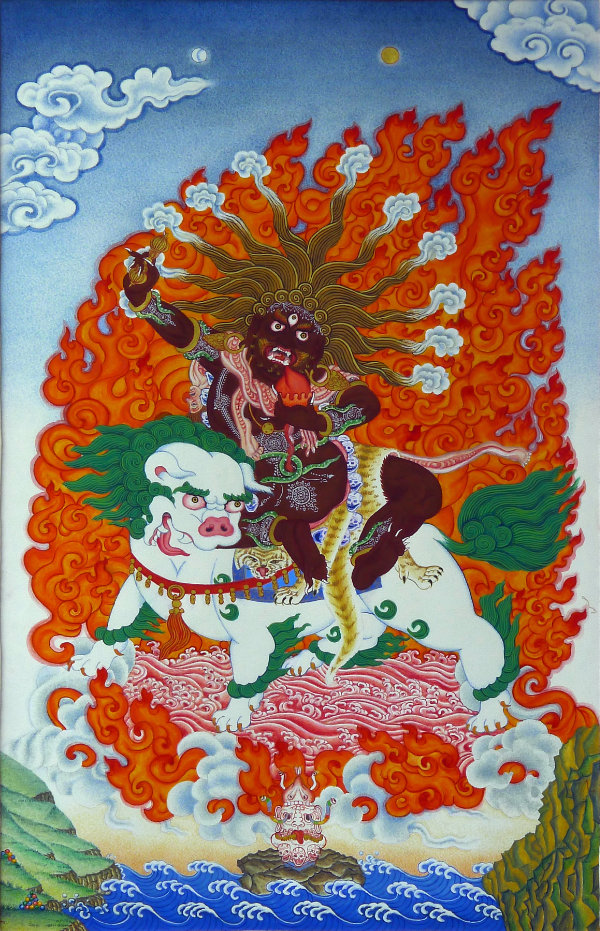
DordjeLegpa
540 x 350 mm
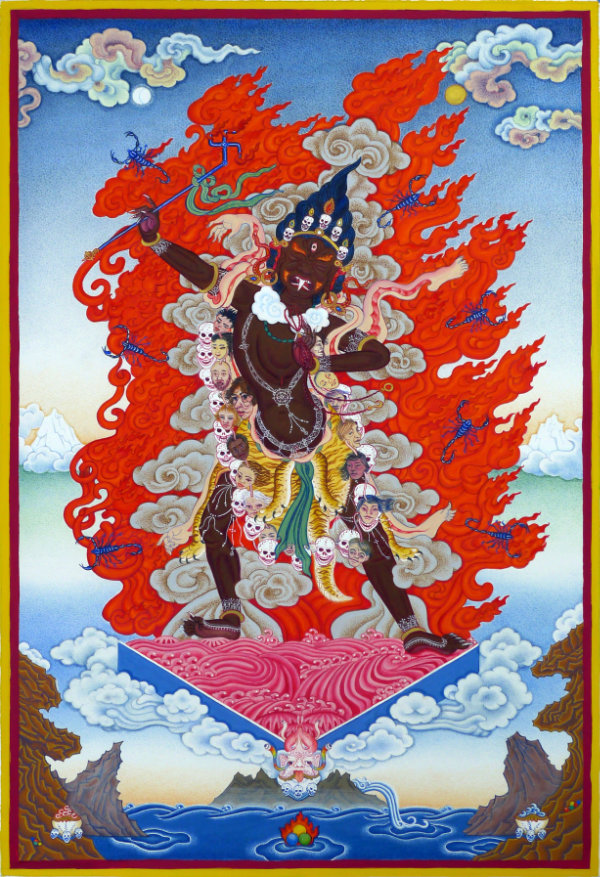
Ekajati
540 x 360 mm
Thangka
It took me a detour and a long time to realise my childhood wish - to make painting my profession. I went to the art academy in Arnhem when I was 30. That year I also became enamoured by dance: I was fascinated by movement and wanted to integrate it into my paintings. After finishing at the academy I wanted to work with “e-motion” - movements and gestures inspired by emotions. It was during the same year that I looked for a Yoga class and came into contact with the drawing and painting classes of Harish Yohari. With him, I made my first sacred art - Kali in a Yantra. I also developed performances and workshops, working with movements of the body in order to produce paint strokes and colours while incorporating sounds with the voice.
After an exciting period in Berlin, I moved to Amsterdam. There I looked for dance classes and found an announcement saying “Dancing with the Dakinis” - in these classes, led by Stoffelina Verdonk, I learned more about integrating body, speech and mind, as Stoffelina called it. Together we did a performance about the dead and went to Finland where she gave a workshop. Fantastic! In the meanwhile I discovered that Stoffelina was doing something secretly... which turned out to be the practises transmitted by Chögyal Namkhai Norbu. After my first introduction, with a very cosy group of practitioners in Amsterdam I went for the first time to Merigar at the end of 1991. I really had to study the Teachings in order to understand them, but the most practical and attractive thing for me was that there was a meditative Vajra Dance. We painted a very strong and heavy Mandala, which still exists, and learned the first steps of the Vajra Dance with Stoffelina.
From the son of my aunt, who was a Geshe in the Gelugpa order, I learned how to draw a Buddha’s head which led me to taking courses with Andy Weber in the Netherlands in 1994. In the following years I painted White and Green Taras, and Mandarava. Over the following 15 years I combined Dharma art with my free artwork.
In 1999, inspired by the practises of Chögyal Namkhai Norbu, I painted the Purification of Six Lokas on large panels (donated to Dzamling Gar in Tenerife). In this purification practice, the disturbing emotions and ignorance are transcended into wisdoms. In this way I arrived at the idea of finding the complementary colours specific to each Loka. In the middle of the panel the two colours mix and produce a certain shade of grey. When the panels are seen together, a horizon in grey is formed; I call it “equanimity”. With these colours and symbols I produced many more variations in smaller works on canvas. More paintings produced since then were inspired by the Teachings.
Once I showed these panel paintings to Chögyal Namkhai Norbu. He asked me a question related to the Santi Maha Sangha training which made me feel somewhat shy. Rinpoche’s reaction was: “Transformation is not Dzogchen!!!”
“TRANSFORMATION” 6 x (120 x 200 cm) Oil on canvas in wooden aluminium frames.
Over the years I studied Thangka art with Lama Gyurmed who came to Merigar (Italy) in 1999 from Tibet to teach with Marian van der Horst and with Gega Lama’s son Tharphen Lintsang in the Karma Gadri style. Currently I hold regular meetings at my studio in Amsterdam with a small group of dedicated Thangka painters.
Transformation is not Dzogchen!!!
Sinkhamukha
Externally, Guru Simhamukha is the nirmanakaya master and wisdom dakini Lekyi Wangmo; internally, she is the sambhogakaya master in peaceful form as Sangwa Yeshe or in wrathful form as Simhamukha; secretly, she is the Great Mother of All the Victorious Ones, or Samantabhadri. Thus, in actuality, she is the essence that embodies the potentiality of all the masters, sugatas, vidyadharas, and victorious ones. She is the yidam through whom any yogin or yogini on the path accomplishes without effort all supreme and common siddhis, and she is very powerful in removing in an instant all the interruptions on the path, such as curses and magic formulas sent by the Eight Classes of gods and spirits and by both human or nonhuman beings.
Her body is dark blue and her lion face is white with a fiercely wrathful expression. As a symbol of eradicating the emotions, the root of samsara, her right hand raises a curved knife, or trigug, with a vajra handle into the sky.
As a symbol of concentrating all the power, capacity, and blessings of the universe in the essence of primordial potentiality, her left hand holds a blood-filled kapala at the heart. As a symbol of the inseparability of method and prajña, she has a khatvanga in the crook of her left arm. As a symbol of manifesting in the total equality in which samsara and nirvana are nondual, her left leg is extended and her right leg is bent in a dance movement while she is standing in a dignified manner on the seat of a lotus, a sun disk, and a corpse. As a symbol of having naturally perfected all the qualities of total wisdom, she has all the ornaments of wrathful female manifestations.
Gouache on cotton canvas
Guru Tragphur
In order to tame all the malicious and arrogant classes of the world, the Mahaguru Padmasambhava manifested in a form that embodied all the wrathful sugatas capable of power and strength, and this form is called Guru Tragphur.
In a dimension of roaring fire and howling wind of wisdom, his body is dark red with a fiercely wrathful expression. To symbolize his command over the Great Secret Vajra, his right hand raises a vajra into the sky. As a symbol of having conquered all the arrogant classes of the universe by means of his power, his left hand squeezes a black, nine-headed scorpion. As a symbol of having completely perfected the power of the wrathful king Supreme Horse Manifestation (Hayagriva), Lord of Lotus Speech, in the midst of his upward-streaming, yellowish, braided hair a green horse head is distinctly neighing. As a symbol of having completely perfected the power of the five families of Garudas, the antidote for taming the powerful Nagas and Tsens of the universe, a Garuda soars above his head and he has wings made of meteorite. As a symbol of embodying the Vajra of mind of all the ocean of masters, sugatas, vidyadharas, and victorious ones, at the center of his heart, inside a thigle of five-colored light, is a brilliant dark blue syllable HŪM. As a symbol of having completely perfected the power of the Kilaya activity, the lower part of his body is shaped as a pointed triangular dagger. In order to totally tame the great classes of beings of this degenerate age who send provocations of energy, he is standing in a dignified manner with the blazing point of the dagger piercing the heart of a Gyalpo and a Senmo that lie across each other upon a lotus and sun disk.
Gouache on prepared cotton, with details in 24 karat gold
74 x 85 cm with frame
Framed with premium anti-reflective Artglass