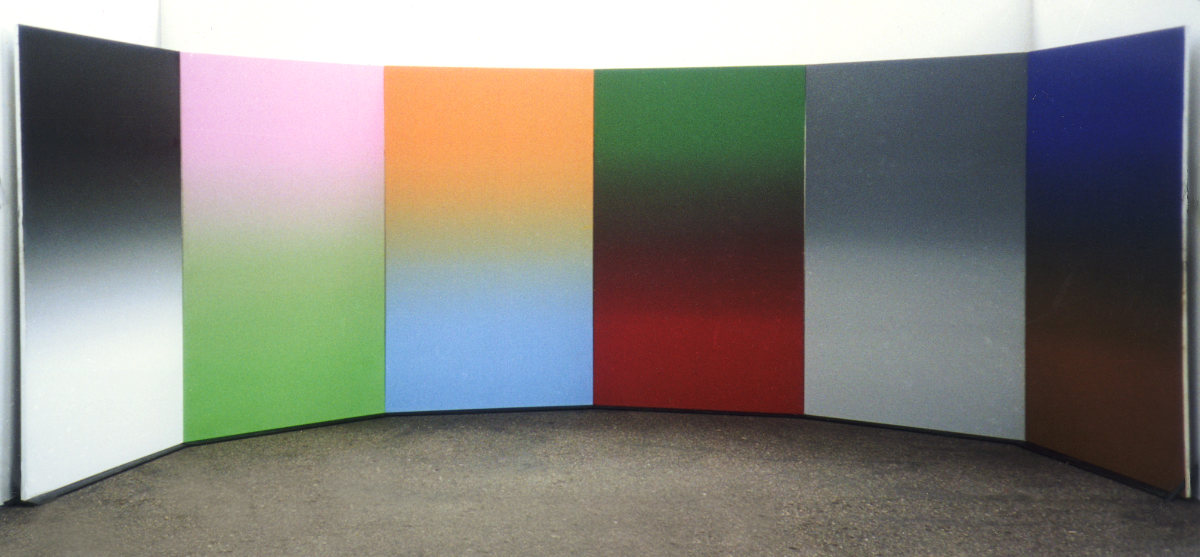
Transformation, 6 Canvases, Oil on Cotton, 120 x 80 cm (????)
Dr. Dorothea Franck
T R A N S F O R M A T I O N
At the opening of Ans Swart’s exhibition in the Waag in Haarlem, North Holland, 8 October 2000, the following introduction was given by Dr. Doro Franck, cultural-literary scientist:
I would like to say a few words to accompany this exhibition, in particular about the symbolic meaning and background to this impressive six-paneled work.
Normally it is tricky to try to clarify works of art with verbal concepts; ultimately a pictorial work cannot be replaced by words. Indeed, words leading to concepts can become an obstacle between a work of art and the viewer. Art should not rely on concepts but on understanding.
Look with an unprejudiced eye despite all I tell you. The power of this colour-magic does not depend on an explanation.
In this case the paintings have a certain symbolic meaning and I will add just a few notes that hopefully will not diminish the view but increase the understanding.
At first people who know the earlier works of Ans Swart will be surprised. After her wildly dynamic and spontaneous paintings of an earlier period, which originated partly out of her expressive performances, the tranquillity of these paintings is surprising. This process was already taking place in her series of vases. But here not only does the movement fade away but also the last remnant of narrative figuration disappears. Though I would hesitate to call these paintings abstract and, as I will make clear, there is still movement, it is of a different character than before.
The inspiration for this study in colour, it can also be said, comes from a Tibetan purification ritual. A few years ago Ans Swart went on an adventurous trip through Tibet and since then she has studied a particular tradition of Tibetan Buddhism. But this particular ritual is only the start, a place of departure. By the way, I don't want to go into details of the symbolic meaning, that would be misleading and taking attention away from the work of art itself. In any case Ans Swart has added her own vision and interpretation.
The starting point of this ritual is visualization. Six disturbing passions or emotions - and the matching worlds (lokas) - are symbolized through particular colours situated in the different chakras. The ritual purifies each colour in turn. Instead of being eliminated the negative emotion (such as pride, jealousy, anger or attachment) is transformed into related wisdom. As a painter Ans saw a challenge. She searched for a way to make this inner transformation process visible. She combined the given colours with their complementary colour. (It is well known that for every colour there is an exact opposite or complementary colour; you can observe it in the after-image on your retina.) She has let the two opposites blend into each other, from the top down. This has brought, so to speak, a fight of antithesis at the point where the contrasting colours meet. This is precisely the most interesting aspect, because there, where the battle should be the most vehement, appears the most quiet zone of grey. In a negative sense grey could be seen as indifferent or doubting, but in this case it can more readily (it lies for the hand, a dutch expression, that it flys out of the before) seen as a form of calm and wisdom, of equanimity, balance and reconciliation.
To become purified every passion must go through this grey zone. So there is really also a movement of meaning in the process of transformation. There is a vertical progression from top to bottom (or the other way around) and a horizontal progression from passion to passion: there is always another nuance of equilibrium arising. But there is still a third axis, a third movement, the one of depth, the line to the viewer. Here not only the grey or the purified colour is significant. Here what matters is the whole: all colours complete each other, having equal value. There is no judgement here about good or bad colours, just as with emotions what is relevant here is the total view, the process of integration. This integration succeeds only when the viewer stands at the right distance. Intentional or not this is psychologically symbolic. We only come to self-knowledge through a necessary distancing, at which point we are able to look at ourselves intelligently and without judgement yet with great precision and patience.
In this same Tibetan tradition it is said that, depending on circumstance and capacity, there are three ways to deal with passions and disturbing emotions etc.
1. one can avoid or neglect the passion.
2. one can transform it into its opposite, like hatred into love.
3. But one can also apply no judgement at all: integrating instead of eliminating or transforming. That means one is so relaxed and balanced that one can also give negative emotions a place. One experiences the energy of the emotions without allowing them to take over and determine our actions.
In these paintings the second as well the third process is present, depending on what the spectator wants to see.
In the final analysis it is the process, which means the path, which is of most importance, not the goal. Even though for this integrated experience - a way of looking which connects and balances all elements - the scene has been set by this work of art, in the end it is the creation of the viewer. Please grant this process the necessary time to unfold.
This adventure in complementary colours is also applied in the other works seen here. Sometimes in a very subtle way as when one sees only the grey on the front side. The colours which, when mixed result in this specific grey, appear only around the frame. It is only when the colours are really their exact complementary that one reaches a balanced grey and, for instance, not a brown or purple or other mixture.
I wish you much joy in looking.
Dr. Dorothea Franck
Six Lokas
Some Words about the Work _ only seen at smartphones.
SixLokas »Transformation«
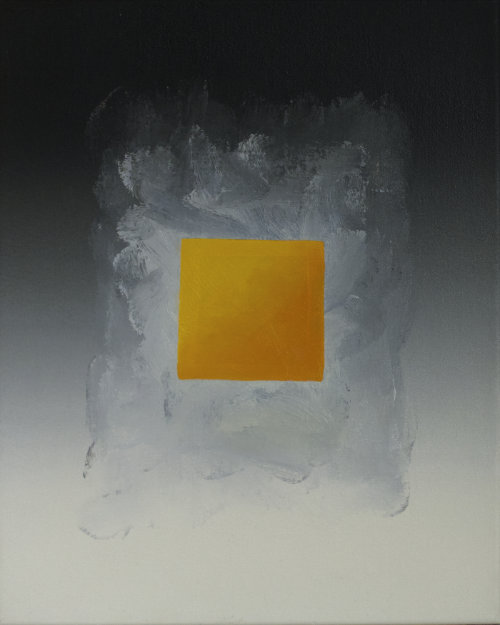
Aerth, Oil on Canvas, 40 x 50 cm
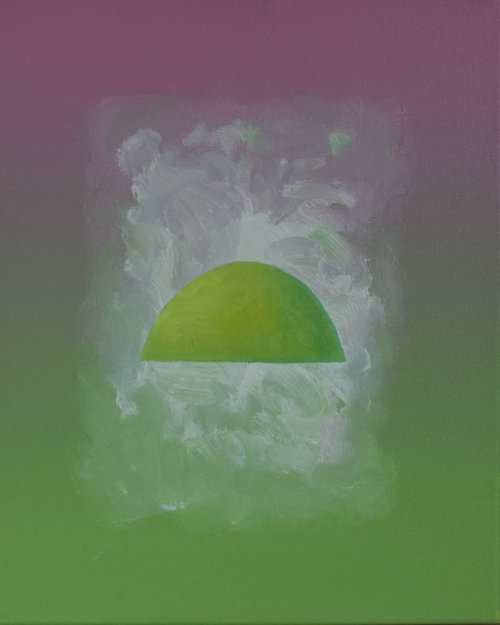
Air, Oil on Canvas, 40 x 50 cm
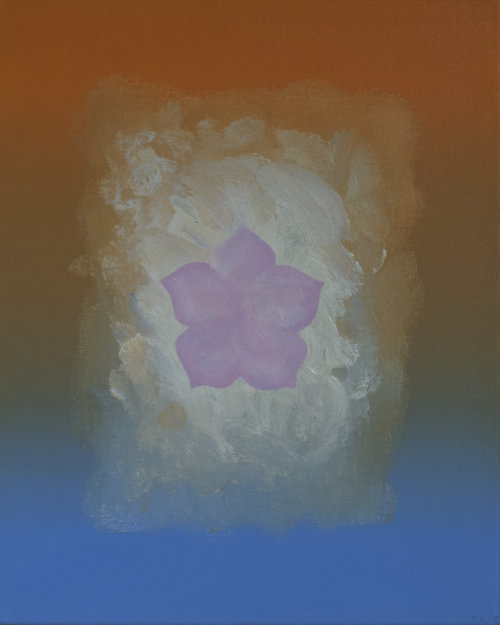
Lotus, Oil on Canvas, 40 x 50 cm
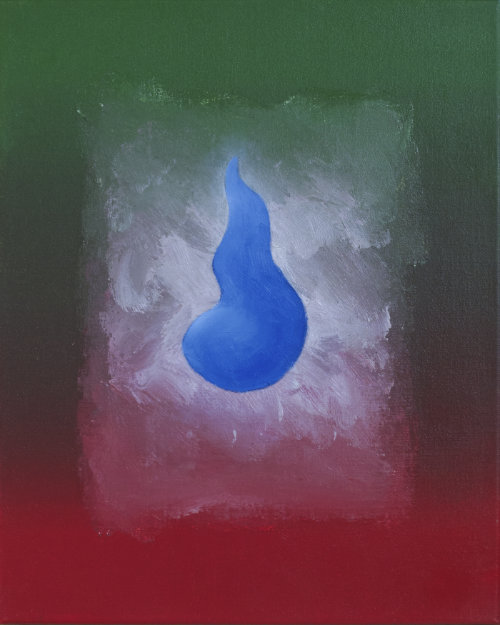
Space, Oil on Canvas, 40 x 50 cm
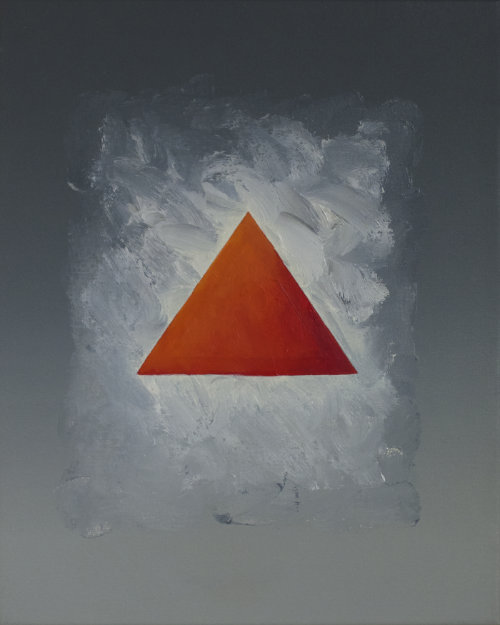
Fire, Oil on Canvas, 40 x 50 cm
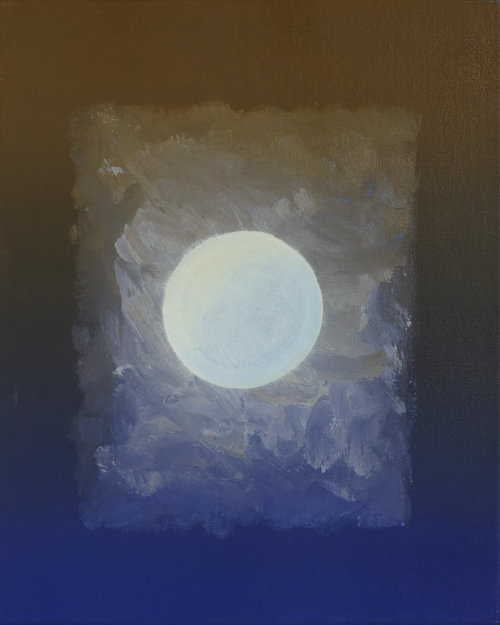
Water, Oil on Canvas, 40 x 50 cm
SixLokas »Wisdoms«
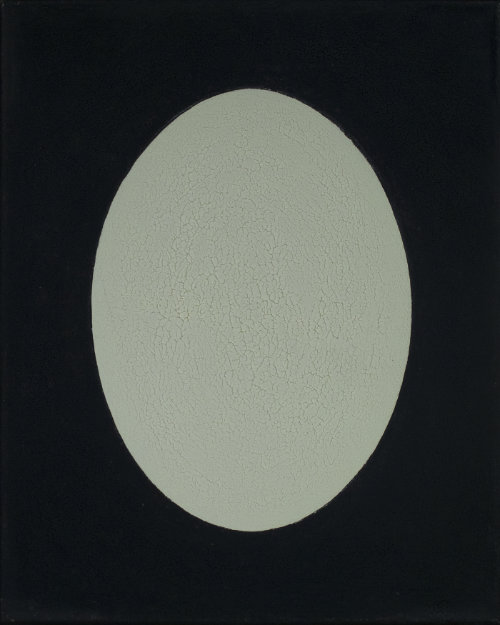
Equanimity Wisdom, Oil on Canvas, 40 x 50 cm
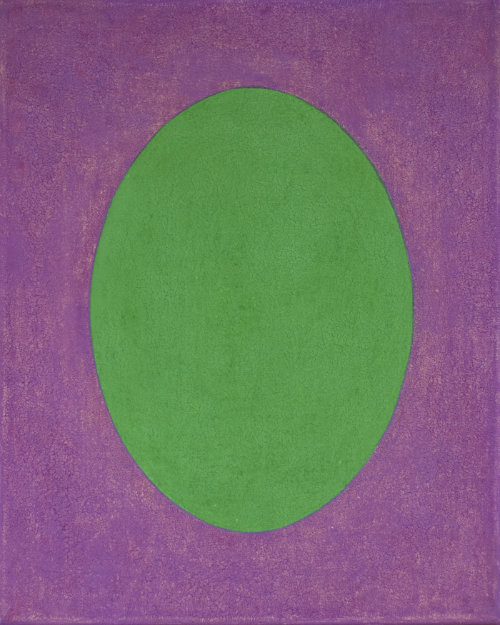
Active, Oil on Canvas, 40 x 50 cm

No Name, Oil on Canvas, 40 x 50 cm
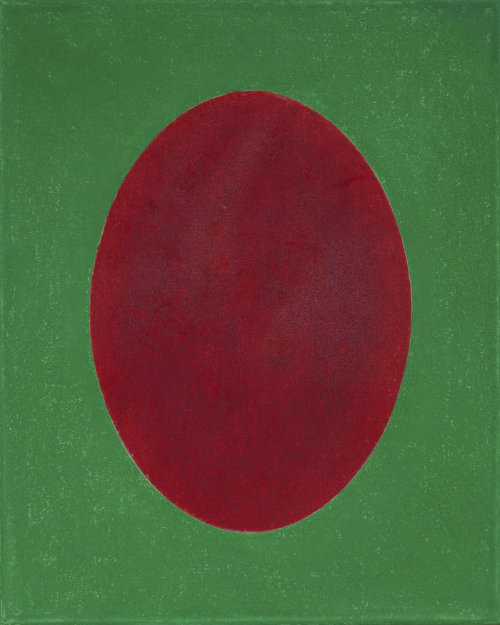
Dharmadatu, Oil on Canvas, 40 x 50 cm
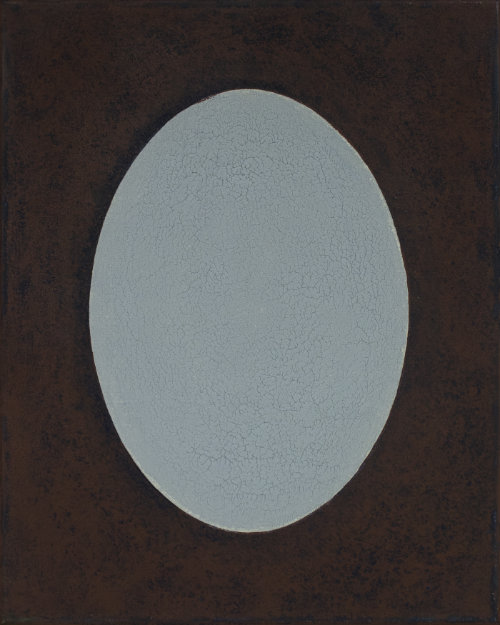
Discriminating, Oil on Canvas, 40 x 50 cm
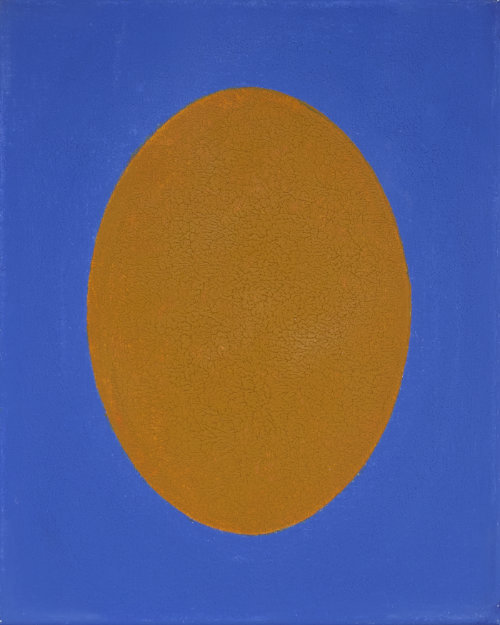
Mirrorlike, Oil on Canvas, 40 x 50 cm