Exhibitions
»Überleben und leben«
Gabriele Stötzer & Ans Swart
Ausstellung vom 6. März bis 12. April 2026
Vernissage: Donnerstag, 5. März 2026 um 18 Uhr
18.30 Uhr: Begrüßung durch Zuzanna Skiba vom Vorstand des VdBK
Einführung in die Ausstellung: Ina Bierstedt
19.30 Uhr: Aktionsmalerei von Gabriele Stötzer
Musik: Annika von Trier, Akkordeon und Gesang
Finissage: Sonntag, 12. April von 13 – 18 Uhr
Ausstellungsgespräch 16:00 Uhr
drip painting on textiles: Workshop mit Ans Swart
Mittwoch, 18. März und Sonntag, 22. März
jeweils von 14:00 bis 17:00 Uhr.
Teilnahmegebühr / workshop fee: 45 €
Anmelden / registrations: veranstaltung@vdbk.de
Öffnungszeiten: Donnerstag – Samstag, 16 – 19 Uhr
Verein der Berliner Künstlerinnen 1867 e. V.
Eisenacher Straße 118, 10777 Berlin
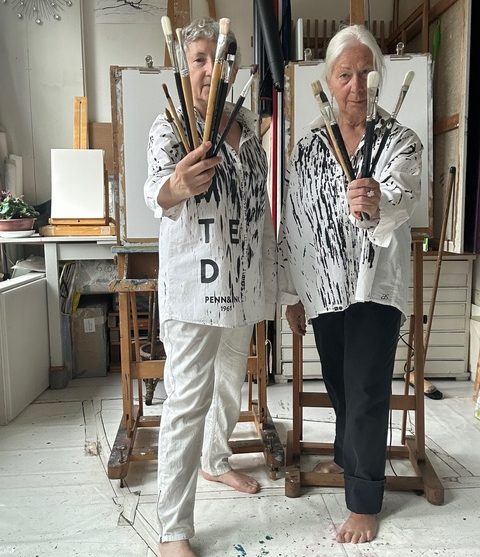
Foto: Gabriele Stötzer & Ans Swart
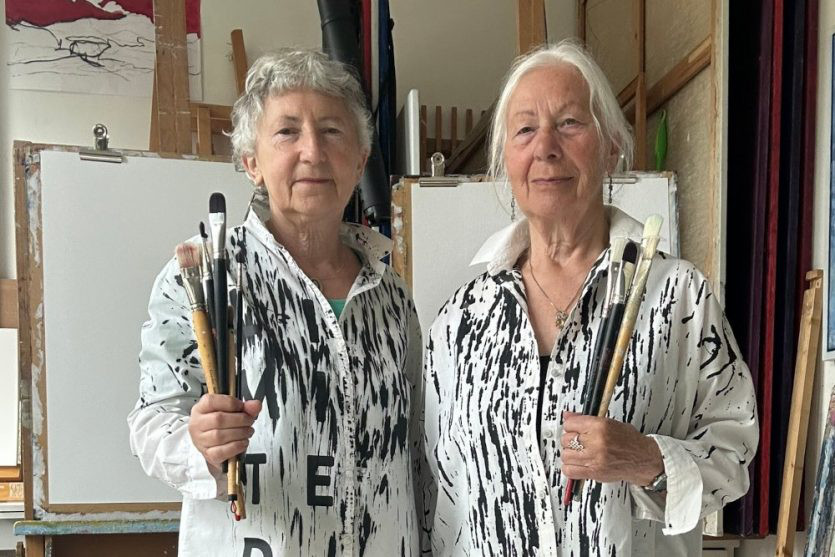
Mit der Ausstellung „überleben und leben“ zeigt der Verein der Berliner Künstlerinnen 1867 Ergebnisse der künstlerischen Zusammenarbeit von Ans Swart und Gabriele Stötzer, die sich schon seit über 30 Jahren kennen und schon einige gemeinsame Performances gemacht haben. Die Ausstellung ist vom 6. März bis 12. April 2026 zu sehen. Die Eröffnung findet am 5. März 2026, 18 Uhr statt.
Im Zentrum steht das Spannungsverhältnis von Überleben und Leben als existenzieller Prozess.
Gabriele Stötzer thematisiert Körperpolitik, Repression und weibliche Selbstermächtigung und versteht Überleben als aktiven Akt des Widerstands.
Ans Swart richtet den Blick auf innere Zustände, psychische Übergänge und fragile Gleichgewichte zwischen Anpassung und Autonomie.
In der Gegenüberstellung der beiden Positionen entsteht ein vielschichtiger Dialog über individuelle und gesellschaftliche Bedingungen des Lebens. „überleben und leben“ lädt dazu ein, Leben als bewusste, immer wieder neu zu treffende Entscheidung zu reflektieren. Die Ausstellung wurde in Kooperation mit Ina Bierstedt entwickelt.
With the exhibition “Überleben und Leben” (Survive and Live), the Verein der Berliner Künstlerinnen 1867 (Association of Berlin Women Artists 1867) is showing the results of the artistic collaboration between Ans Swart and Gabriele Stötzer, who have known each other for over 30 years and have already done several joint performances. The exhibition will be on display from March 6 to April 12, 2026. The opening will take place on March 5, 2026, at 6 p.m.
The focus is on the tension between survival and life as an existential process.
Gabriele Stötzer addresses body politics, repression, and female empowerment, understanding survival as an active act of resistance.
Ans Swart focuses on inner states, psychological transitions, and the fragile balance between conformity and autonomy.
The juxtaposition of the two positions gives rise to a multi-layered dialogue about the individual and social conditions of life. “Surviving and Living” invites us to reflect on life as a conscious decision that must be made again and again. The exhibition was developed in cooperation with Ina Bierstedt.
Veranstalter/Organizer: Verein der Berliner Künstlerinnen 1867 e.V. • Eisenacherstraase 118 / Ecke Fuggerstrasse • 10777 Berlin • info@vdbk1867.de • www.vdbk1867.de • Link
WAT GEBEURT ER BIJ AFSCHEID?
U wordt van harte verwelkomt door Gerrie Willemsen met een programma.
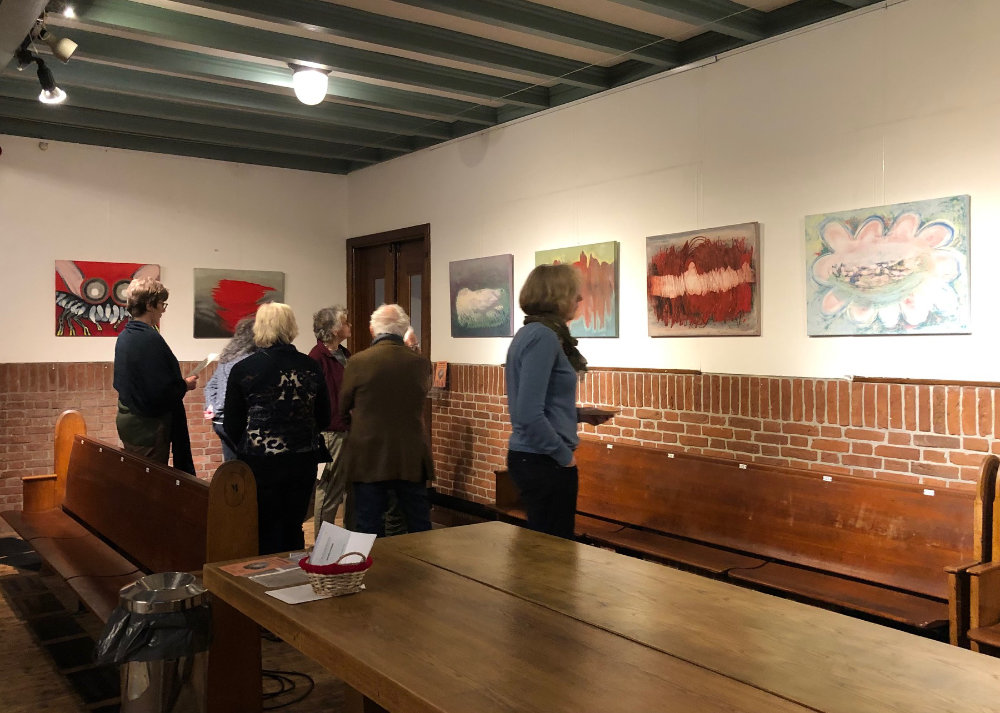
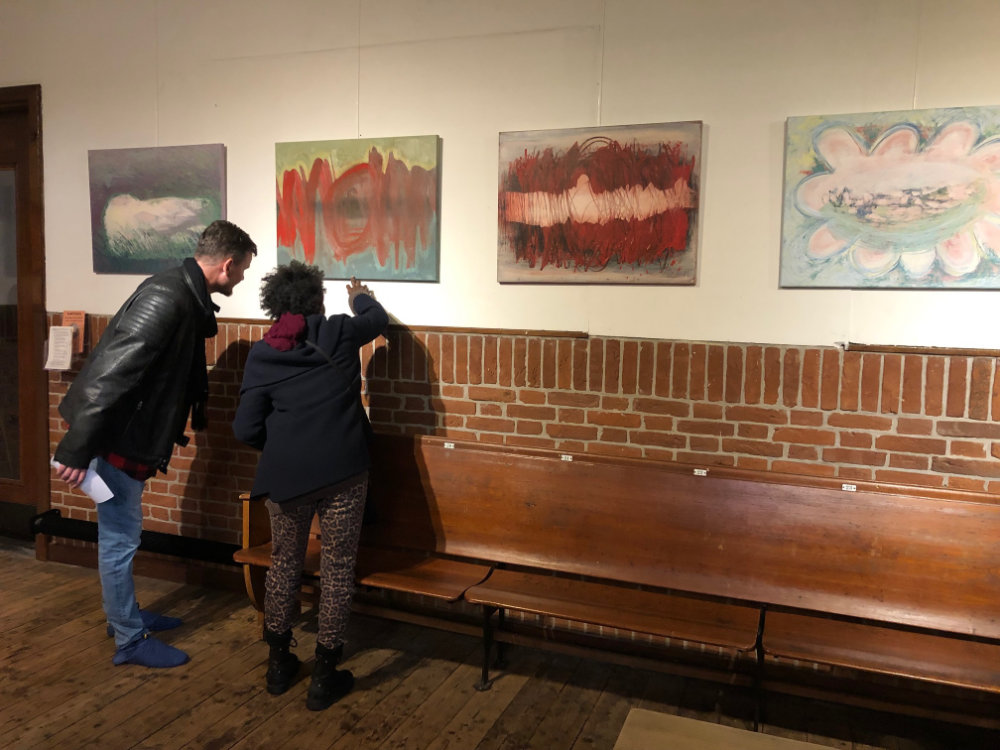
Deze Kunstvesper staat in het teken van afscheid. Afscheid van een moeder, zoals Ans Swart dat uitgedrukt heeft in haar schilderijen. Maar ook van onze eigen dagelijkse vormen van afscheid. Ervaren we afscheid als verlies of ervaren we ook ruimte? Dat proberen we samen te beleven.
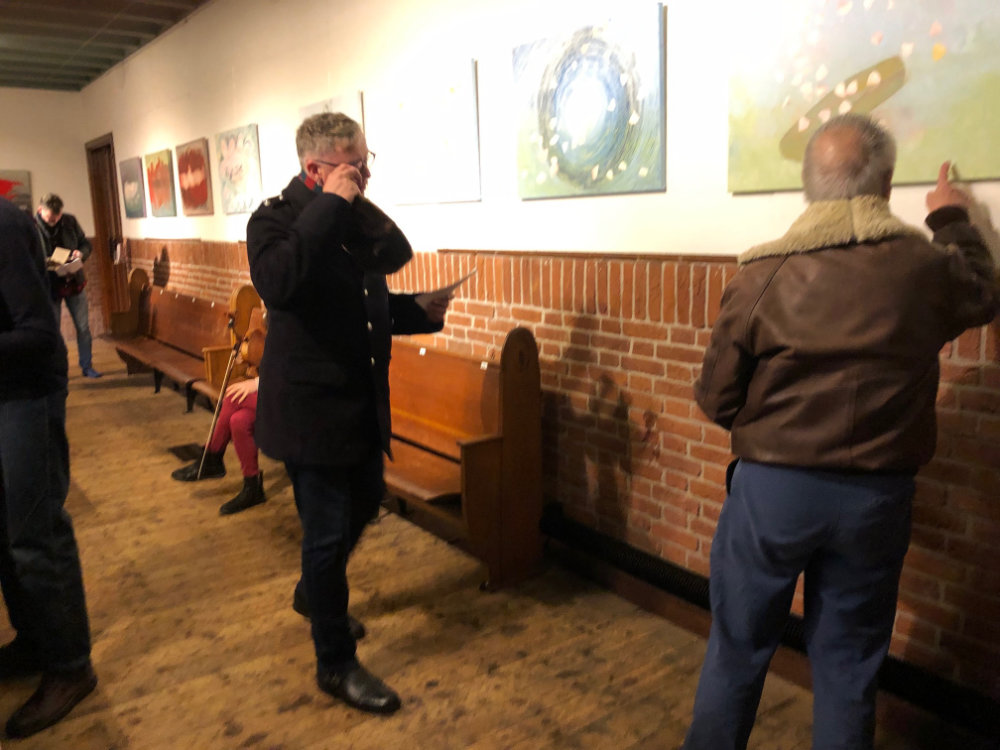
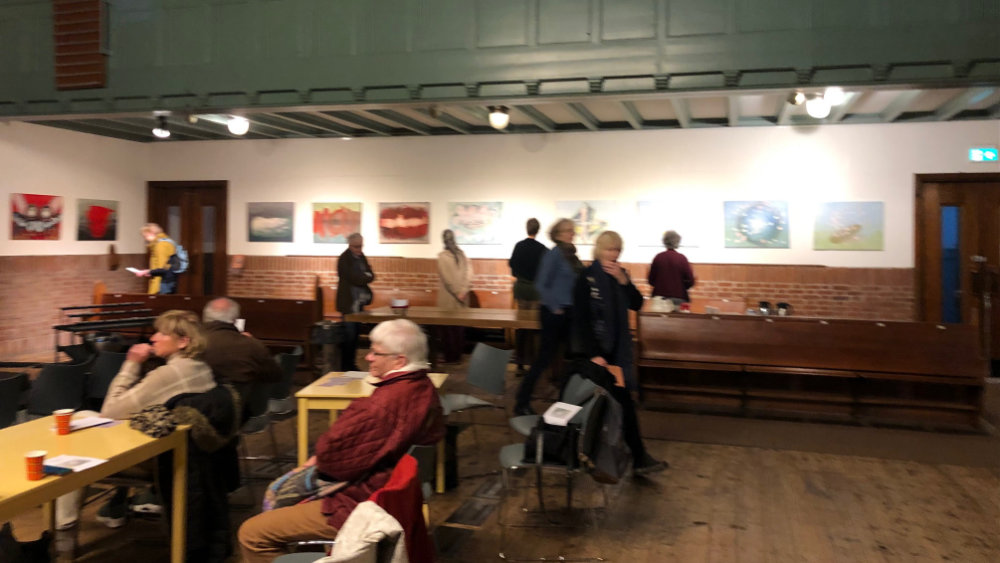
Opening was Zondag 12 Nov. 2023 - 16.00 uur
Schilderijen - Ans Swart
Muziek - Alkistis Misouli, alt-viool
Overweging - Lydia Meiling
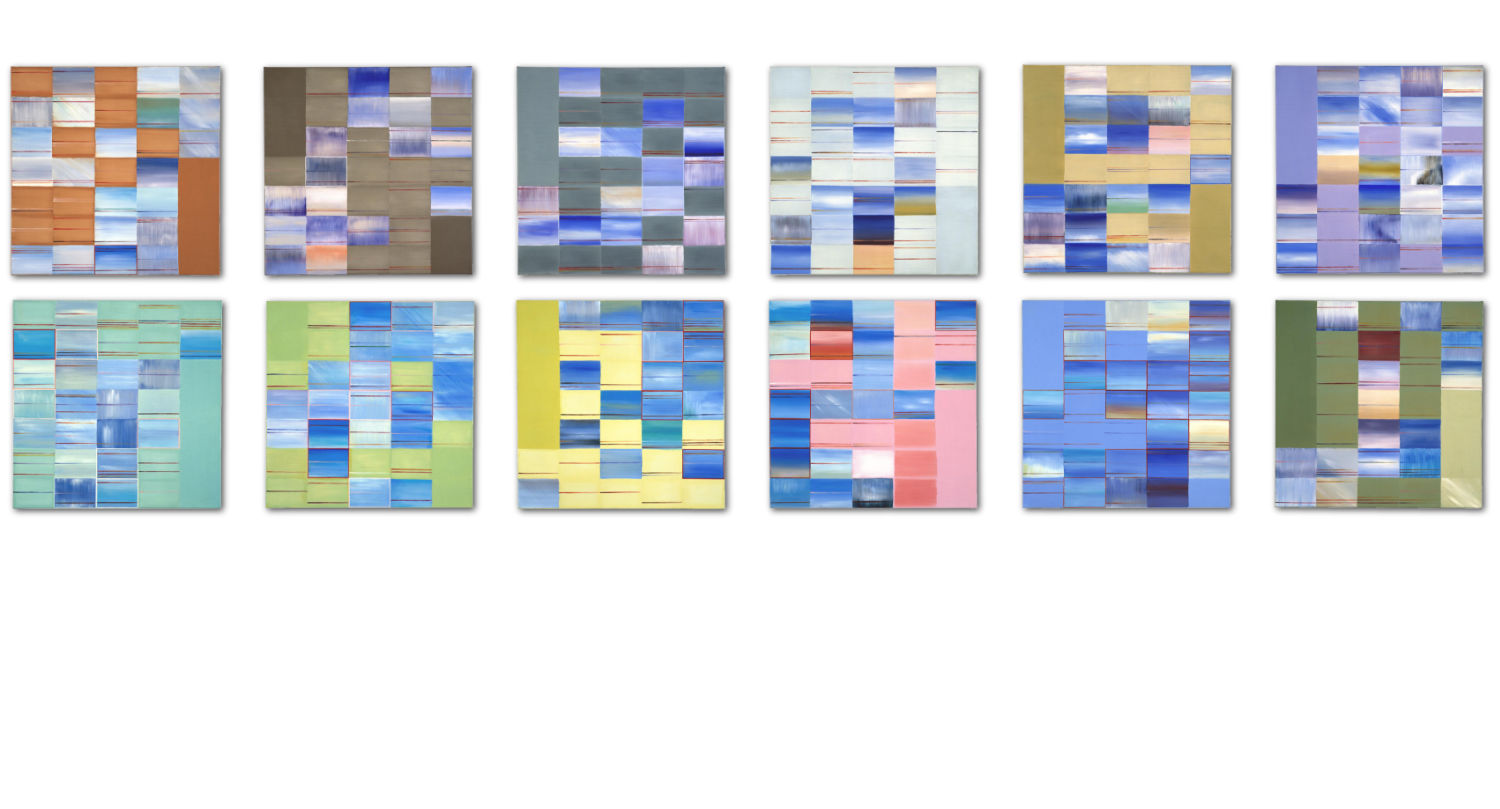
WIMM - 12 Month - Presentation in the EXPO Hall »Wilhelmina Gasthuis«, each 90 x 90 cm
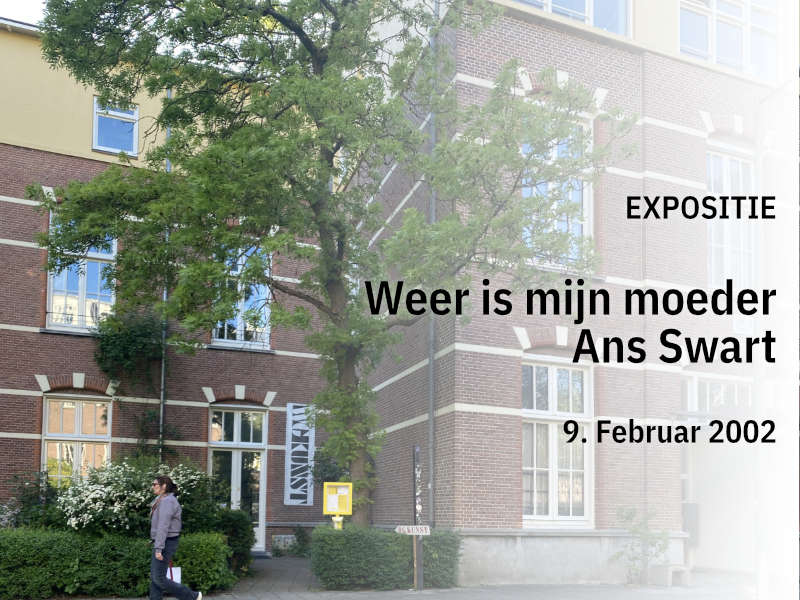
Video of the Vernissage Please click on the picture to start.
Exhibition in the EXPO Hall
Wilhelmina Gasthuis (WG) Site in Amsterdam
»Weather, It's my mother again«
»Weer is mijn moeder«
Ans Swart
February 9, 2002
Opening:
Mr. Visser, Gallerist EXPO Hall WG
Joke Konijn, Visual Artist
Music:
Marjo Disseldorp: Harmonica
Yori Swart: Guitar
Cees Swart: Guitar
Camera, Recording and Editing:
Jos Swart
Roger Broechler
Weather/Again is my mother
Comment by Ans Swart
My mother, born on a farm, had a lot to say about the weather. She was a walking weather-forecast. In her last 5 years of life she was strict in writing every day and nearly every day something about the weather. These notations touched me and became immediately after her death my new source of inspiration.
read more…
Every painting represents a month of the year, 12 in total. Every month has its basic color, wherein the days are filled in with the type of weather she noted. A horizontal brushstroke means the weather was dry. If the brushstroke is vertical it means that there was rainfall. A diagonal brushstroke means storm or strong wind. The temperature, as far she mentioned, is given in red frames and when it was colder in more white and blue tones.
All her other notations are incorporated in horizontal lines, which cross the days. The different colours mean her visits or being visited, to or by her own family (dark-red), children (red), grandchildren (orange) and great-grandchildren (yellow), friends (purple), neighbors (brown), church (ochre), shopping (English red), housework and so on. The place where the line is put in the day means if it was a thought, a call or physical contact. In this way a timeless document of a lifetime emerges, in which the season’s changes can be read from the changing colours.
Vernacular
Thinking about my mother and the weather makes me wander in my mind through the land she grew up in. The enormous space with the horizon as a green line on which the dike was resting. Meadows and clouds above flat land: De Wijde Wormer polder, west of Purmerend.
read more…
Where first thing in the morning father walked outside with the children to observe the skies and inhale the land. Then old Dutch expressions were mumbled, as "ze maken er weer eentje klaar" (they're getting one ready again), when a thunderstorm approached from the southwest, behind the farm belonging to Klaas Schuit. Or "een blinkerd voor een stinkerd" (a wasted gift) when the sun shone for a wee while before a smart shower, or "de noordwester buien, die beduien dat de zomer aan komt kruien" (the northwestern showers mean that summer is trundling along) when showers approached from Jisperkerk. And "onweer over kale bomen, kan van 't hele jaar niets komen" (thunder over bare trees does not bring a good year) at the arrival of a wet and cold spring. The weather decided the work to be done on the farm. The cows go outside as soon as the grass is high enough and they go back inside when the grass is finished. Which are the best days to get the hay in and what makes the grass grow? When to go out and have fun ice-skating on the ditches and when better not take the risk of going outside?
Her life continued in the small town of Alkmaar, where the weather influenced her life as you can read in her entries. Her notes about the weather and other people are as a cauldron, holding a fragile substance. My mother shows the cauldron of her life by naming the facts and dates through which vulnerability itself appears.
Out of the 5 years in which she wrote the diary entries I have only used the last year. At that time her bike was waiting in the shed, unused, and despite her repaired hip she did not walk without stick or walking aid. At age 84 she releases her gymnastic lessons.
She especially mentions the happy experiences. It was so her to say:
"I still know exactly what the weather was like today a year ago".
Rain is mentioned 51 times, but the sun 104 times. Four times the word 'ugly', but 59 times 'beautiful'. 'Shopping' and 'birthday' are mentioned 43 times, but 'at home' 131 and 'house' 181 times.
Between the lines I read her consciousness of life being finite. Out of the rhythm of the words repeatedly used her own vulnerability appears. For example, when all family members present at a birthday are named, you can't help thinking about the absent ones. As if she's saying "Everything has an end but life still goes on". Almost with identical simplicity and strength I tried to design the stream of her life and hide myself in my paintings as a child hides behind her mother.